Engineering Team Management
363 items from kdeldycke/awesome-engineering-team-management ★2,615
-
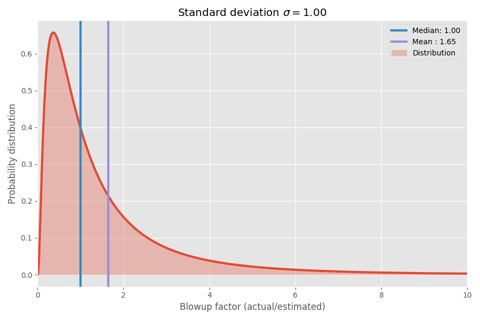
Why software projects take longer than you think: a statistical model erikbern.com
“Confirms the hunch that developers estimate the median well, but the mean ends up being much higher.”
-
Why I Never Hire Brilliant Men en.wikisource.org
5 simple rules for hiring men, from 1924. Things haven't changed a lot in a century.
-
Yes, and… en.wikipedia.org
“A rule-of-thumb in improvisational comedy (…). It is also used in business and other organizations as a principle that improves the effectiveness of the brainstorming process, fosters effective communication, and encourages the free sharing of ideas.”
-
Chesterton's fence en.wikipedia.org
“If you're considering nominating something for deletion, or changing a policy, because it doesn't appear to have any use or purpose, research its history first.” It's not we'd like to play conservative here, but because we need to fix the knowledge hole as described above.
-
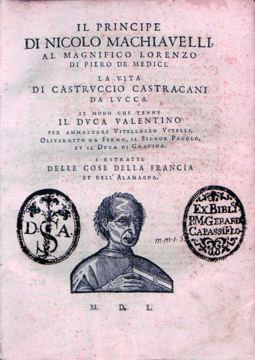
The Prince en.wikipedia.org
Machiavelli's ideas on how to accrue honor and power as a leader. Resorting to that level of politics in a company is a sure way to render the culture highly toxic, as well as corrupting and demoralizing the organization at all levels.
-
Selectorate theory en.wikipedia.org
“In selectorate theory, three groups of people affect leaders. These groups are the nominal selectorate, the real selectorate, and the winning coalition. (…) To remain in power, leaders must maintain their winning coalition.”
-
Second-system effect en.wikipedia.org
“Tendency of small, elegant, and successful systems, to be succeeded by over-engineered, bloated systems”.
-
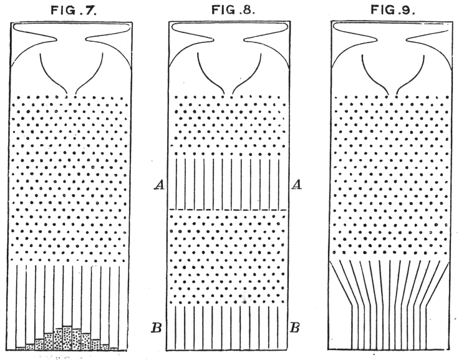
Regression toward the mean en.wikipedia.org
Or why after a period of intense euphoria and ambition, things slowly get back to their usual mediocrity.
-
Osborne effect en.wikipedia.org
“A social phenomenon of customers canceling or deferring orders for the current soon-to-be-obsolete product as an unexpected drawback of a company's announcing a future product prematurely.” This is the price to pay for hasty marketing actions.
-
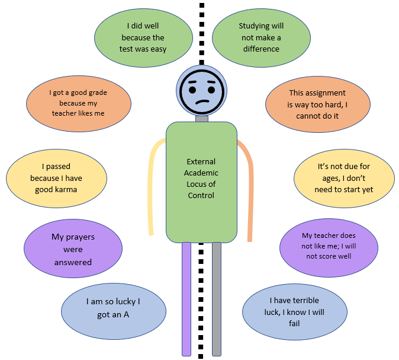
Locus of control en.wikipedia.org
A framework on “the degree to which people believe that they have control over the outcome of events in their lives, as opposed to external forces beyond their control.”
-
Hanlon's razor en.wikipedia.org
“Never attribute to malice that which is adequately explained by stupidity.” My favorite flavor of Occam's Razor, and a crucial mantra to defuse rampant paranoia in a highly political setting.
-
Escalation of commitment en.wikipedia.org
A.k.a. sunk-cost fallacy, or the rational explanation of why the hell do we still irrationally keep investing in a bad project.
-
Circulation of elite en.wikipedia.org
“Changes of regime, revolutions, and so on occur not when rulers are overthrown from below, but when one elite replaces another.”
-
Baumol en.wikipedia.org
in action.” (source) - Explains how the pool of professional managers gets distributed into the various sectors of the economy.
-
Embedded Rules of Thumb embeddedartistry.com
Guidelines and heuristics to provide a reasonable approximation of the truth while developing embedded devices. Most also applies to software projects in general.
-
How do managers get stuck? elidedbranches.com
Identify scenario preventing managers to be promoted at the next level.
-
Building and Motivating Engineering Teams elidedbranches.com
What DO engineers want? Money, purpose and respect.
-
Founder to CEO docs.google.com
You can build you own career engine, starting as a technical founder of a startup, building a great team, then grow with the company to learn and become a full-fledge CEO.
-
What nobody tells you about documentation divio.com
There is four kinds of documentation: tutorials, how-to guides, explanation and reference. Each with their own structure and mode of writing.
-
Technical Writing Courses developers.google.com
This collection of courses and learning resources aims to improve your technical documentation. Learn how to plan and author technical documents. You can also learn about the role of technical writers in a company.
-
3 tricks to start working despite not feeling like it deprocrastination.co
“'Screw it, let's do it'; Start sloppy; Start small”.
-
Tech Due Diligence Calculator decodingvc.gitbooks.io
A list of questions by topic to help understand how you are building your tech and engineering team, trying to highlight red flags.
-
Technical debt as a lack of understanding daverupert.com
“The problem lies in "never reorganizing (the code) to reflect your understanding." (…) Organizationally, you pay in velocity and turnover; talented people are going to leave after a few rounds of bullshit.”
-
The Heilmeier Catechism darpa.mil
A simple set of question which helped DARPA evaluates research programs to generate big rewards by taking big risks.
-
Normalization of deviance danluu.com
Explores how the factors accounting for disasters accumulates unnoticed until it's too late. This has been studied on other fields, but not in software engineering.
-
5 Things I've Learned in 20 Years of Programming daedtech.com
“A programmer with 5 years of experienced has more industry tenure than half of the entire industry.” Also see this follow-up comment of 10 things I've learned after 35 years.
-
The Prosperous Software Consultant dabit3.medium.com
This article let you understand how an independent consultant operates.
-
Mistakes I've Made as an Engineering Manager css-tricks.com
Mistakes: “1) Thinking people give feedback the way they want to receive it; 2) Trying to do everything yourself; 3) Communicating something one time is enough; 4) You have to have everything together all the time.”
-
Learning Technical Writing Using the Engineering Method cs.tufts.edu
An alternative approach, involving a weekly meeting of a writing group. An interesting dynamic to gather feedback and experience.
-
Tips for Writing Technical Papers cs.stanford.edu
Another set of tips, specifically using the example of a technical paper describing an improvement of an algorithm.
-
I've Built Multiple Growth Teams. Here's Why I Won't Do It Again. conversionxl.com
“Few folks understand probability, and most executives don't care about the data, regardless of what it says.”
-
The Toxic Handler: Organizational Hero — and Casualty companiesalive.com
“toxic handler, a manager who voluntarily shoulders the sadness, frustration, bitterness, and anger that are endemic to organizational life. Although toxic handlers may be found at every level in organizations, many work near the top”.
-
To Get Good, Go After The Metagame commoncog.com
“Every sufficiently interesting game has a metagame above it. This is the game about the game. It is often called 'the meta'. (…) The meta is what you get after you master boring fundamentals. But observing the state of the current meta often reveals what boring fundamentals…
-
Sustainable Sources of Competitive Advantage collaborativefund.com
“The ability to learn faster than your competition; to empathize with customers more than your competition; to communicate more effectively than your competition; The willingness to fail more than your competition; to wait longer than your competition”.
-
A Few Rules collaborativefund.com
A formalized list of some wisdom you probably encountered elsewhere.
-
If management isn't a promotion, then engineering isn't a demotion charity.wtf
This essay deconstruct why management ends up being seen as a promotion, how its new acquired privileges and powers creates an implicit hierarchy, which in turns creates bad incentives because of loss aversion. At the end, the only way forwards is to change the organization's…
-
17 Reasons not to be a Manager charity.wtf
An article to discourage the faint-hearted recruits.
-
An Alternative Approach to Re-Orgs At Your Company caseyaccidental.com
“Trying not to repeat re-org mistakes, we started working on a structure that would make the re-org act like a feedback-fueled progress driven by the teams instead of by people above them.” This is an attempt to extract from the ground up signals pointing to inadequate…
-
A Career Cold Start Algorithm boz.com
The author developed an algorithm to ramp-up quickly when joining an existing team where he had a massive knowledge deficit and no pre-existing relationships.
-
Want to Know the Difference Between a CTO and a VP Engineering? bothsidesofthetable.com
Another way to look at thing: placing these roles along the “Process Orientation” and “Technical Capability” quadrants.
-
Choose Boring Technology boringtechnology.club
“Boring, in the sense that it's well understood.”
-
Avoiding Intellectual Phase Lock books.google.com
Anticipating an important result so much, humans by nature are susceptible to introduce subtle confirmation bias. To combat IPL, you might introduce random unknowns to suppress any attempt to game the system toward the object of your desire. I.e. avoid to cheat yourself to…
-
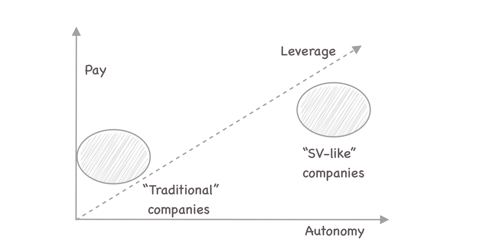
What Silicon Valley "Gets" about Software Engineers that Traditional Companies Do Not blog.pragmaticengineer.com
“1. Autonomy for software engineers; 2. Curious problem solvers, not mindless resources; 3. Internal data, code, and documentation transparency; 4. Exposure to the business and to business metrics; 5. Engineer-to-engineer comms over triangle-communication; 6. Investing in a…
-
Surprising Things About Working at Well-Known Tech Unicorns blog.pragmaticengineer.com
Echoes my own experience on differences between expectations and reality in high growth and visible companies from the point of view of an engineering manager.
-
Developers mentoring other developers: practices I've seen work well blog.pragmaticengineer.com
Discusses mentorship practices that work well engineer-to-engineer.
-
Programmer Interrupted blog.ninlabs.com
Research shows the devastating effect of interrupting developers: 1. 15 min is required to resume work; 2. A programmer get just one uninterrupted 2-hour session in a day; 3. Worst time to interrupt: during edits, searches & comprehension.
-
Teams are like bread blog.jessitron.com
Resonates with the Absorb and Split strategy discussed above: “if you have one team where the magic is flourishing, don't kill it. Feed it, grow it, and let it be a source of further strong teams. No rushing.”
-
Ten simple rules for structuring papers biorxiv.org
“Focusing on how readers consume information, we present a set of 10 simple rules to help you get across the main idea of your paper.”
-
Wadge's Law (of Meetings) billwadge.wordpress.com
“Before every formal meeting there's a smaller, more exclusive, less formal meeting where all the important decisions are made.”
-
10 Admirable Attributes of a Great Technical Lead betterprogramming.pub
“They are smart yet kind. Knowledgeable, yet humble. Busy, yet approachable.”
- next page of items loading…