AGI & CoCoSci
837 items from yuzheshi/awesome-agi-cocosci ★398
-
Abductive Inference in Bayesian Networks: A Review link.springer.com
Advances in Bayesian Networks, 2004. [All Versions]. The goal of this paper is to serve as a survey for the problem of abductive inference (or belief revision) in Bayesian networks. Thus, the problem is introduced in its two variants: total abduction (or MPE) and partial…
-
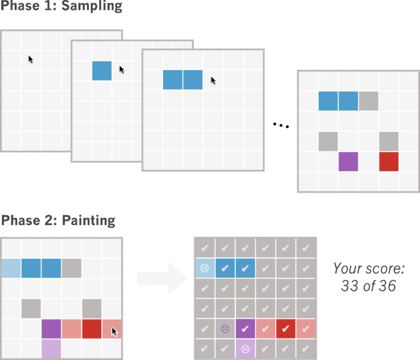
The Abduction of Sherlock Holmes: A Dataset for Visual Abductive Reasoning link.springer.com
ECCV'22, 2022. [All Versions]. [Preprint]. This paper presents Sherlock, an annotated corpus of 103K images for testing machine capacity for abductive reasoning beyond literal image contents. The corpus construction process adopts a free-viewing paradigm: participants first…
-
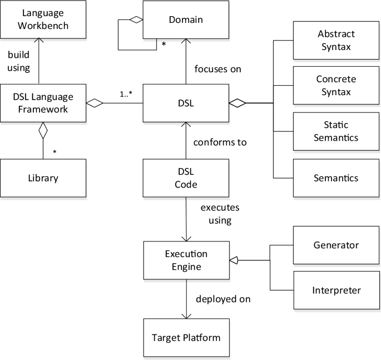
LegalLanguage: A Domain-Specific Language for Legal Contexts link.springer.com
EEWC'19, 2019. [All Versions]. Nowadays legal ontologies have been used in the legal domain, however, being poorly explored in legislative and production processes. This paper analyses the adoption of legal ontologies as a tool to support these processes, in particular, related…
-
Answer Set Programming link.springer.com
ICLPNR'99, 1999. [All Versions]. [Preprint]. The original paper on Answer Set Programming (ASP), a form of declarative programming oriented towards difficult search problems, on the use of nonmonotonic reasoning in knowledge representation. In ASP solutions to a problem are…
-
Abduction in Logic Programming link.springer.com
Computational Logic, 2002. [All Versions]. [Preprint]. Abduction in Logic Programming started in the late 80s, early 90s, in an attempt to extend logic programming into a framework suitable for a variety of problems in Artificial Intelligence and other areas of Computer…
-
Action Languages, Answer Sets, and Planning link.springer.com
The Logic Programming Paradigms, 1999. [All Versions]. [Preprint]. This is a discussion of some of the achievements and challenges related to representing actions and the design of planners from the perspective of logic programming. The authors talk about recent work on action…
-
Abduction, Induction, and Analogy link.springer.com
Model-Based Reasoning in Science and Technology, 2010. [All Versions]. The distinctions and relations between Abduction, Induction, and Analogy.
-
How Much Can Experimental Cost Be Reduced in Active Learning of Agent Strategies? link.springer.com
ILP'18, 2018. [All Versions].
-
VisualCOMET: Reasoning About the Dynamic Context of a Still Image link.springer.com
ECCV'20, 2020. [All Versions].
-
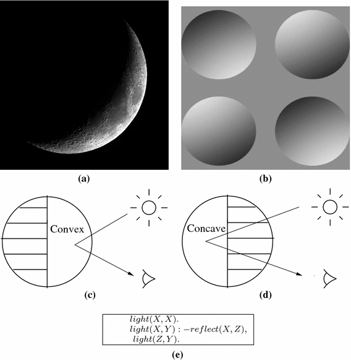
Towards a theory of commonsense visual reasoning link.springer.com
FSTTCS, 1990. [All Versions]. The original paper on visual commonsense.
-
Towards an Architecture for Cognitive Vision Using Qualitative Spatio-temporal Representations and Abduction link.springer.com
Spatial Cognition, 2002. [All Versions].
-
Towards combining inductive logic programming with Bayesian networks link.springer.com
ILP'01, 2001. [All Versions].
-
Abductive Reasoning and Learning link.springer.com
Springer, 2000. [All Versions]. This book contains leading survey papers on the various aspects of Abduction, both logical and numerical approaches.
-
Abductive Cognition: The Epistemological and Eco-Cognitive Dimensions of Hypothetical Reasoning link.springer.com
Springer, 2009. [All Versions]. Most philosophers of science in the twentieth century have concluded that no logic of creative processes exists and, moreover, that a rational model of discovery is impossible. In short, scientific creative inferences are irrational and there is…
-
A computational process-tracing method for measuring people’s planning strategies and how they change over time link.springer.com
Behavior Research Methods, 2022. [All Versions]. Model-based strategy identification.
-
When to trust the data: Further investigations of system error in a scientific reasoning task link.springer.com
Memory & Cognition, 1996. [All Versions]. When evaluating experimental evidence, how do people deal with the possibility that some of the feedback is erroneous? The potential for error means that evidence evaluation must include decisions about when to “trust the data.” This…
-
Logics for Epistemic Programs link.springer.com
Synthese, 2004. [All Versions].
-
Filters, random fields and maximum entropy (FRAME): Towards a unified theory for texture modeling link.springer.com
International Journal of Computer Vision, 1998. [All Versions]. [Preprint]. This article presents a statistical theory for texture modeling. This theory combines filtering theory and Markov random field modeling through the maximum entropy principle, and interprets and…
-
How do people generalize causal relations over objects? A non-parametric Bayesian account link.springer.com
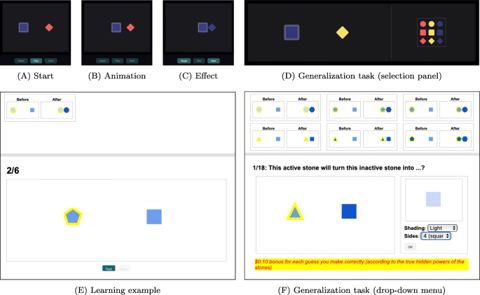
Computational Brain & Behavior, 2022. [All Versions]. [Preprint]. How do people decide how general a causal relationship is, in terms of the entities or situations it applies to? What features do people use to decide whether a new situation is governed by a new causal law or an…
-
Pragmatic Inference and Visual Abstraction Enable Contextual Flexibility During Visual Communication link.springer.com
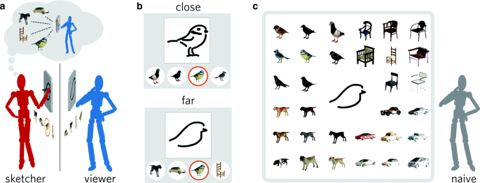
Computational Brain & Behavior, 2020. [All Versions]. A computational account on the rational behavior in graphical language games.
-
Do People Ask Good Questions? link.springer.com
Computational Brain & Behavior, 2018. [All Versions].
-
From intention to implementation: automating biomedical research via LLMs link.springer.com
Science China Information Sciences, 2025. [All Versions]. Conventional biomedical research is increasingly labor-intensive due to the exponential growth of scientific literature and datasets. Artificial intelligence (AI), particularly large language models (LLMs), has the…
-
Abductive learning: towards bridging machine learning and logical reasoning link.springer.com
Science China Information Sciences, 2019. [All Versions].
-
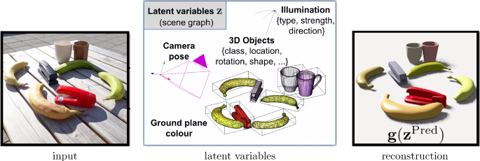
Structured Generative Models for Scene Understanding link.springer.com
International Journal of Computer Vision, 2025. [All Versions]. This position paper argues for the use of structured generative models (SGMs) for the understanding of static scenes. This requires the reconstruction of a 3D scene from an input image (or a set of multi-view…
-
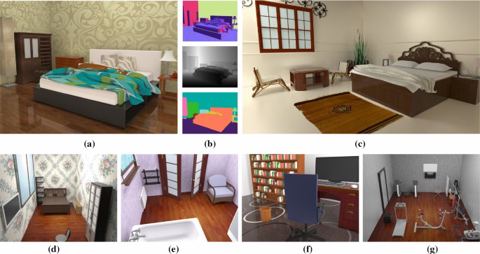
Configurable 3D Scene Synthesis and 2D Image Rendering with Per-pixel Ground Truth Using Stochastic Grammars link.springer.com
International Journal of Computer Vision, 2018. [All Versions]. [Preprint]. This work proposes a systematic learning-based approach to the generation of massive quantities of synthetic 3D scenes and arbitrary numbers of photorealistic 2D images thereof, with associated ground…
-
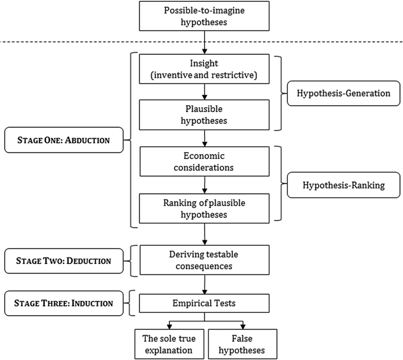
Abduction − the context of discovery + underdetermination = inference to the best explanation link.springer.com
Synthese, 2019. [All Versions].
-
Abductive inference within a pragmatic framework link.springer.com
Synthese, 2018. [All Versions].
-
On the distinction between Peirce's abduction and Lipton's Inference to the best explanation link.springer.com
Synthese, 2011. [All Versions].
-
Patterns of abduction link.springer.com
Synthese, 2007. [All Versions]. A categorization for Abduction in the account of pure philosophy.
-
A domain‑specifc language framework for farm management information systems in precision agriculture link.springer.com
Precision Agriculture, 2020. [All Versions]. This paper proposes a domain-specific language framework for the design and development of precision-agriculture FMISs, which copes with challenges on supporting the understandability, enhancing communication and analysis of the…
-
When Lingens meets Frege: communication without common ground link.springer.com
Philosophical Studies, 2021. [All Versions].
-
Detect, Understand, Act: A Neuro-symbolic Hierarchical Reinforcement Learning Framework link.springer.com
Machine Learning, 2022. [All Versions]. A neuro-symbolic framework that integrates meta-policy learning in inductive logic programming.
-
Scenic: a language for scenario specification and data generation link.springer.com
Machine Learning, 2022. [All Versions]. This paper proposes a domain-specific language, Scenic, for describing scenarios that are distributions over scenes and the behaviors of their agents over time. Scenic combines concise, readable syntax for spatiotemporal relationships…
-
Meta-Interpretive Learning from noisy images link.springer.com
Machine Learning, 2018. [All Versions].
-
Ultra-Strong Machine Learning: comprehensibility of programs learned with ILP link.springer.com
Machine Learning, 2018. [All Versions]. During the 1980s Michie defined Machine Learning in terms of two orthogonal axes of performance: predictive accuracy and comprehensibility of generated hypotheses. Since predictive accuracy was readily measurable and comprehensibility not…
-
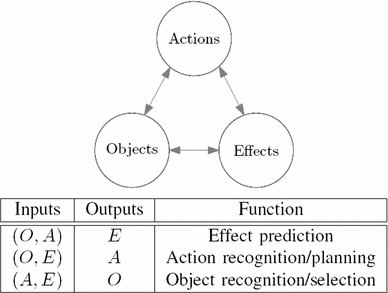
Relational affordances for multiple-object manipulation link.springer.com
Autonomous Robots, 2017. [All Versions].
-
Toward understanding the importance of gesture in distributed scientific collaboration link.springer.com
Knowledge and Information Systems, 2006. [All Versions].
-
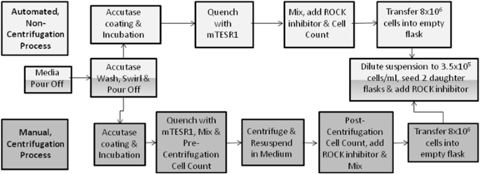
Comparability of automated human induced pluripotent stem cell culture: a pilot study link.springer.com
Bioprocess and Biosystems Engineering, 2016. [All Versions].
-
Disjunctive Abduction link.springer.com
New Generation Computing, 2019. [All Versions].
-
Pareto optimality in multiobjective problems link.springer.com
Applied Mathematics and Optimization, 1977. [All Versions]. The original paper on the pareto optimality in multiobjective problems.
-
Gestalt Psychology link.springer.com
Psychologische Forschung, 1967. [All Versions]. Wolfgang Köhler's review on Gestalt psychology.
-
Learning to perceive and act by trial and error link.springer.com
Machine Learning, 1991. [All Versions].
-
Beneficial and harmful explanatory machine learning link.springer.com
Machine Learning, 2021. [All Versions]. Given the recent successes of Deep Learning in AI there has been increased interest in the role and need for explanations in machine learned theories. A distinct notion in this context is that of Michie’s definition of ultra-strong…
-
Machine Discovery of Comprehensible Strategies for Simple Games Using Meta-interpretive Learning link.springer.com
New Generation Computing, 2019. [All Versions].
-
The uses of argument library.lol
Cambridge University Press, 1958. [All Versions]. Stephen Toulmin's introduction to the Toulmin argument pattern, which is generally consist of a claim, a justification, and a rebuttal.
-
Words, thoughts, and theories library.lol
MIT Press, 1997. [All Versions]. Alison Gopnik's book that articulates and defends the "theory theory" of cognitive and semantic development, the idea that infants and young children, like scientists, learn about the world by forming and revising theories-a view of the origins…
-
Individual differences among deep neural network models kriegeskortelab.zuckermaninstitute.columbia.edu
Nature Communications, 2020. [All Versions].
-
Human-level control through deep reinforcement learning klab.tch.harvard.edu
Nature, 2015. [All Versions]. The original paper on solving Atari games via Deep Q-Network.
-
From information scaling of natural images to regimes of statistical models jstor.org
Quarterly of Applied Mathematics, 2008. [All Versions]. [Preprint]. One fundamental property of natural image data that distinguishes vision from other sensory tasks such as speech recognition is that scale plays a profound role in image formation and interpretation…
-
A tagmemic approach to paragraph analysis jstor.org
College Composition and Communication, 1965. [All Versions]. The original paper on analyzing the structure of expository paragraphs, with the two patterns---the Topic-Restriction-Illustration pattern and the Problem-Solution pattern.
- next page of items loading…