An augmented reality microscope with real-time artificial intelligence integration for cancer diagnosis
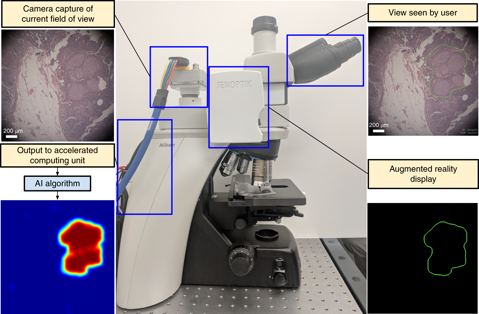
Nature Medicine, 2019. [All Versions]. The microscopic assessment of tissue samples is instrumental for the diagnosis and staging of cancer, and thus guides therapy. However, these assessments demonstrate considerable variability and many regions of the world lack access to…
- from
- AGI & CoCoSci
- added
- 2026-10-10
- likes
- 0
similar
-
An agentic system for rare disease diagnosis with traceable reasoning nature.com
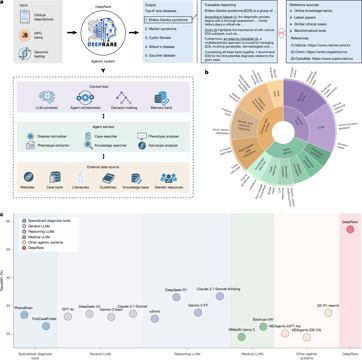
Nature, 2026. [All Versions]. Rare diseases affect more than 300 million people worldwide, yet timely and accurate diagnosis remains an urgent challenge. Patients often endure a prolonged ‘diagnostic odyssey’ exceeding 5 years, marked by repeated referrals, misdiagnoses and…
-
Virtual and augmented reality for biomedical applications cell.com
Cell Reports Medicine, 2021. [All Versions]. 3D visualization technologies such as virtual reality (VR), augmented reality (AR), and mixed reality (MR) have gained popularity in the recent decade. Digital extended reality (XR) technologies have been adopted in various domains…
-
Human–machine collaboration for improving semiconductor process development nature.com
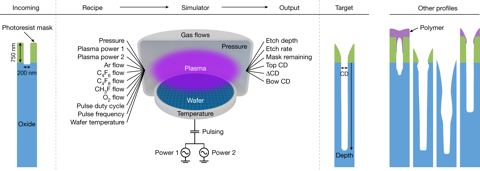
Nature, 2023. [All Versions]. [Nature News]. This work studies Bayesian optimization algorithms to investigate how artificial intelligence (AI) might decrease the cost of developing complex semiconductor chip processes. In particular, this work create a controlled virtual…
-
Empowering biomedical discovery with AI agents cell.com
Cell, 2024. [All Versions]. The authors envision “AI scientists” as systems capable of skeptical learning and reasoning that empower biomedical research through collaborative agents that integrate AI models and biomedical tools with experimental platforms. Rather than taking…
-
Scientific discovery in the age of artificial intelligence nature.com
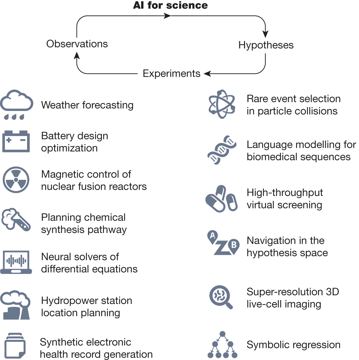
Nature, 2023. [All Versions]. A review article that examines breakthroughs over the past decade that include self-supervised learning, which allows models to be trained on vast amounts of unlabelled data, and geometric deep learning, which leverages knowledge about the…
-
TOAD github.com
Tumor Origin Assessment via Deep-learning; weakly-supervised multi-task model predicting cancer primary origin from H&E whole-slide images.
AGI & CoCoSci › Papers > Science Logology > AI Assisted Research: “Nature Medicine, 2019. [All Versions]. The microscopic assessment of tissue samples is instrumental for the diagnosis and staging of cancer, and thus guides therapy. However, these assessments demonstrate considerable variability and many regions of the world lack access to…”