Scientific discovery in the age of artificial intelligence
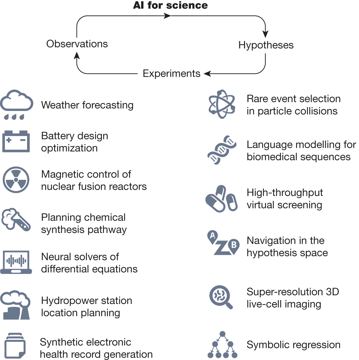
Nature, 2023. [All Versions]. A review article that examines breakthroughs over the past decade that include self-supervised learning, which allows models to be trained on vast amounts of unlabelled data, and geometric deep learning, which leverages knowledge about the…
- from
- AGI & CoCoSci
- added
- 2026-10-10
- likes
- 0
similar
-
Using human brain activity to guide machine learning nature.com
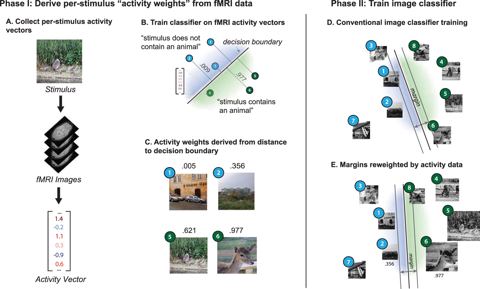
Scientific Report, 2018. [All Versions].
-
Quantifying artificial intelligence through algorithmic generalization nature.com
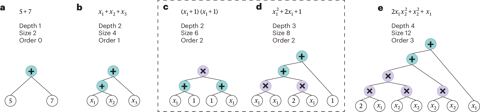
Nature Machine Intelligence, 2025. [All Versions]. The rapid development of artificial intelligence (AI) systems has created an urgent need for their scientific quantification. While their fluency across a variety of domains is impressive, AI systems fall short on tests…
-
Autonomous chemical research with large language models nature.com
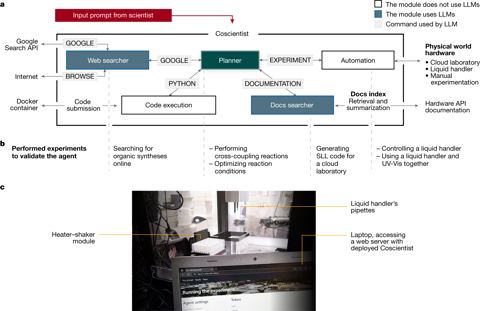
Nature, 2023. [All Versions]. An artificial intelligence system driven by GPT-4 that autonomously designs, plans and performs complex experiments by incorporating large language models empowered by tools such as internet and documentation search, code execution and experimental…
-
Towards end-to-end automation of AI research nature.com
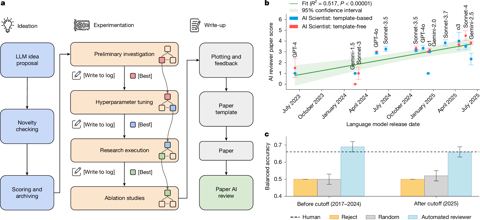
Nature, 2026. [All Versions]. The automation of science is a long-standing ambition in artificial intelligence (AI) research. Although the community has made substantial progress in automating individual components of the scientific process, a system that autonomously navigates…
-
The future of open human feedback nature.com
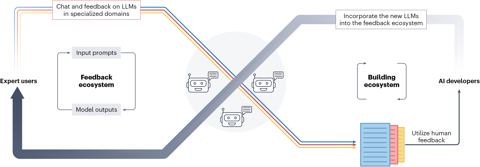
Nature Machine Intelligence, 2025. [All Versions]. Human feedback on conversations with language models is central to how these systems learn about the world, improve their capabilities and are steered towards desirable and safe behaviours. However, this feedback is mostly…
-
AGI & CoCoSci › Papers > Science Logology > AI Assisted Research: “Nature, 2023. [All Versions]. A review article that examines breakthroughs over the past decade that include self-supervised learning, which allows models to be trained on vast amounts of unlabelled data, and geometric deep learning, which leverages knowledge about the…”