-
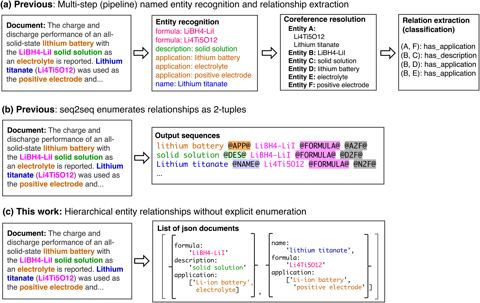
Structured information extraction from scientific text with large language models nature.com
Nature Communications, 2024. [All Versions]. This paper presents a simple approach to joint named entity recognition and relation extraction and demonstrate how pretrained large language models can be fine-tuned to extract useful records of complex scientific knowledge. The…
-
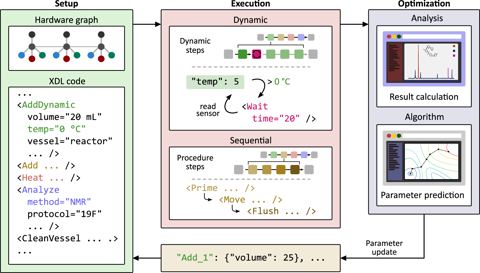
An integrated self-optimizing programmable chemical synthesis and reaction engine nature.com
Nature Communications, 2024. [All Versions]. Robotic platforms for chemistry are developing rapidly but most systems are not currently able to adapt to changing circumstances in real-time. This paper presents a dynamically programmable system capable of making, optimizing, and…
-
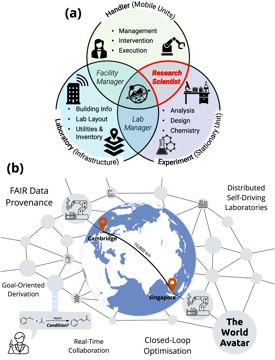
A dynamic knowledge graph approach to distributed self-driving laboratories nature.com
Nature Communications, 2024. [All Versions]. This work employs ontologies to capture data and material flows in design-make-test-analyse cycles, utilising autonomous agents as executable knowledge components to carry out the experimentation workflow. Data provenance is recorded…
-
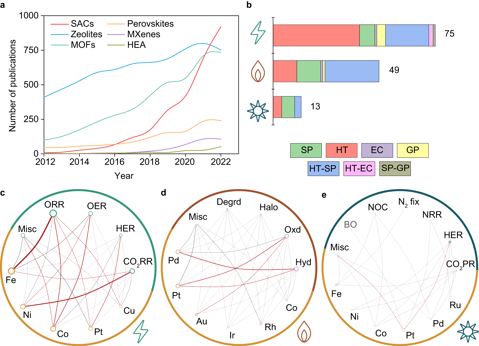
Nature Communications, 2023. [All Versions]. This paper introduces a transformer model for automated synthesis protocol analysis in catalyst discovery, exemplified using single-atom heterogeneous catalysts (SACs), a rapidly expanding catalyst family. The model adeptly converts…
-
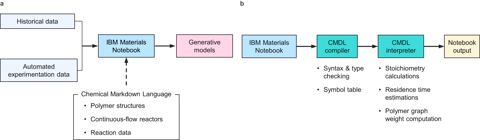
Nature Communications, 2023. [All Versions]. [Project]. Advances in machine learning (ML) and automated experimentation are poised to vastly accelerate research in polymer science. Data representation is a critical aspect for enabling ML integration in research workflows, yet…
-
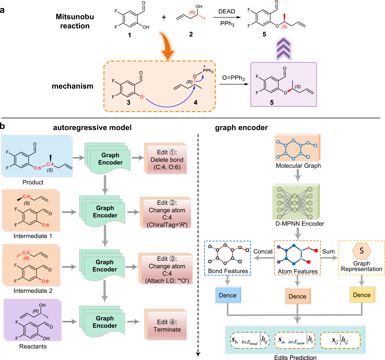
Nature Communications, 2023. [All Versions]. Retrosynthesis planning, the process of identifying a set of available reactions to synthesize the target molecules, remains a major challenge in organic synthesis. Recently, computer-aided synthesis planning has gained renewed…
-
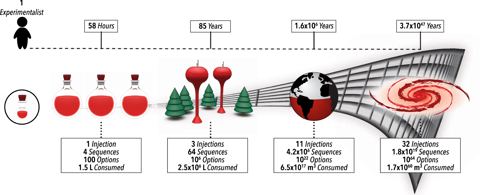
Nature Communications, 2023. [All Versions]. Closed-loop, autonomous experimentation enables accelerated and material-efficient exploration of large reaction spaces without the need for user intervention. However, autonomous exploration of advanced materials with complex…
-
Synthesizing theories of human language with Bayesian program induction nature.com
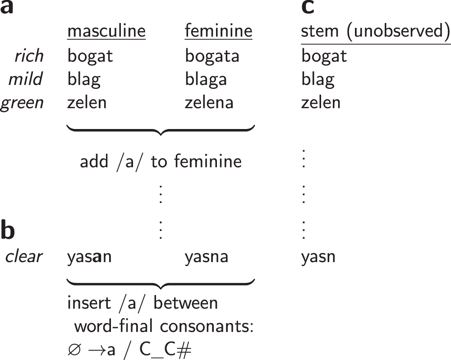
Nature Communications, 2022. [All Versions]. Automated, data-driven construction and evaluation of scientific models and theories is a long-standing challenge in artificial intelligence. This work presents a framework for algorithmically synthesizing models of a basic part of…
-
Inferring experimental procedures from text-based representations of chemical reactions nature.com
Nature Communications, 2021. [All Versions]. This paper presents data-driven models for predicting the entire sequence of synthesis steps starting from a textual representation of a chemical equation, for application in batch organic chemistry.
-
Single-atom alloy catalysts designed by first-principles calculations and artificial intelligence nature.com
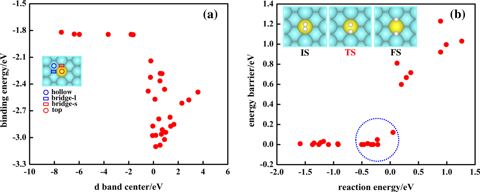
Nature Communications, 2021. [All Versions]. This paper addresses the problem of new Single-atom-alloy catalysts (SAACs) discovery by applying a compressed-sensing data-analytics approach parameterized with density-functional inputs.
-
Automated extraction of chemical synthesis actions from experimental procedures nature.com
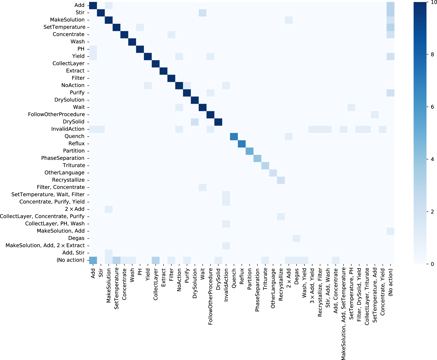
Nature Communications, 2020. [All Versions]. This paper presents a method to convert unstructured experimental procedures written in English to structured synthetic steps (action sequences) reflecting all the operations needed to successfully conduct the corresponding chemical…
-
Virtual reality in behavioral neuroscience and beyond nature.com
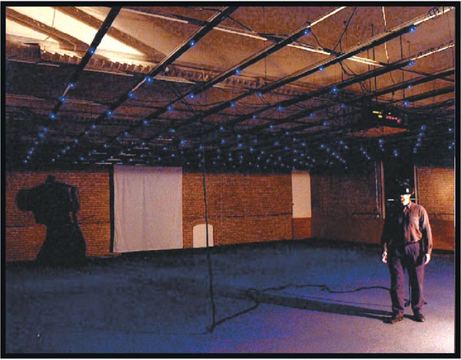
Nature Neuroscience, 2002. [All Versions]. A classic review on the early applications of Virtual Reality to behavioral studies.
-
The BioPAX community standard for pathway data sharing nature.com
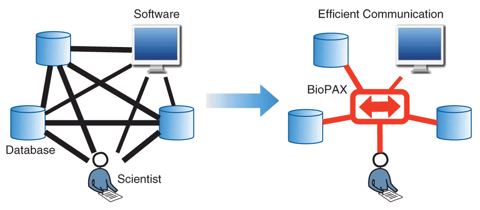
Nature Biotechnology, 2010. [All Versions]. [Preprint]. Biological Pathway Exchange (BioPAX) is a standard language to represent biological pathways at the molecular and cellular level and to facilitate the exchange of pathway data. BioPAX can represent metabolic and signaling…
-
Natural speech reveals the semantic maps that tile human cerebral cortex nature.com
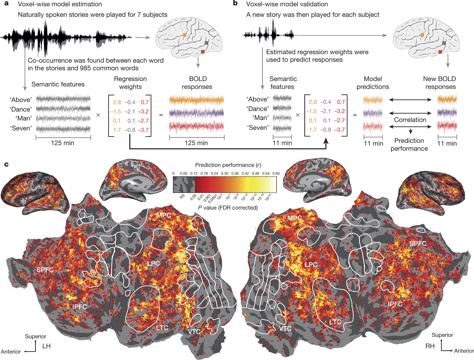
Nature, 2016. [All Versions]. [Preprint]. [Code & Tutorial]. The meaning of language is represented in regions of the cerebral cortex collectively known as the ‘semantic system’. However, little of the semantic system has been mapped comprehensively, and the semantic…
-
Probabilistic machine learning and artificial intelligence nature.com
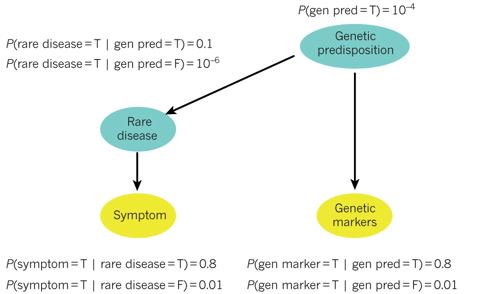
Nature, 2015. [All Versions]. Probabilistic modelling provides a framework for understanding what learning is, and has therefore emerged as one of the principal theoretical and practical approaches for designing machines that learn from data acquired through experience. The…
-
Functional genomic hypothesis generation and experimentation by a robot scientist nature.com
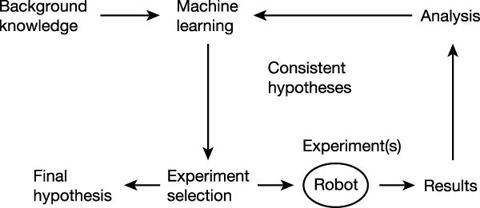
Nature, 2004. [All Versions]. This paper describes a physically implemented robotic system that applies techniques from artificial intelligence to carry out cycles of scientific experimentation. The system automatically originates hypotheses to explain observations, devises…
-
Six factors affecting reproducibility in life science research and how to handle them nature.com
Nature Advertisement.
-
Five keys to writing a reproducible lab protocol nature.com
Nature, 2021. [All Versions]. This interviewing paper introduces five ways to increase the reproducibility of experimental protocols: (i) documenting protocols as the experiment goes; (ii) providing video illustrations in addition to written protocols; (iii) using electronic…
-
The Internet of Things comes to the lab nature.com
Nature, 2017. [All Versions]. The emergence of connected instruments and equipment promises to untether researchers from the laboratory --- letting them fine-tune experiments and analyse data remotely.
-
1,500 scientists lift the lid on reproducibility nature.com
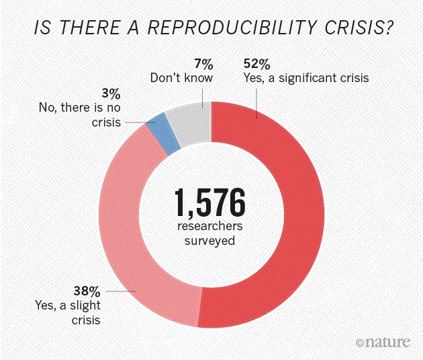
Nature, 2016. [All Versions].
-
Neuron, 2012. [All Versions].
-
With or Without U? The Appropriate Test for a U-Shaped Relationship mpra.ub.uni-muenchen.de
Oxford Bulletin of Economics and Statistics, 2010. [All Versions]. The original method for testing U-shape relation from the data, which is distinctive from the quadratic regression test.
-
Infinite Latent Feature Models and the Indian Buffet Process mlg.eng.cam.ac.uk
Gatsby Computational Neuroscience Unit Technical Report 2005-001, 2005. [All Versions].
-
Program Synthesis microsoft.com
Foundations and Trends in Programming Languages, 2017. [All Versions]. Sumit Gulwani's comprehensive review on program synthesis.
-
cite2vec: Citation-Driven Document Exploration via Word Embeddings matthewberger.github.io
IEEE Transactions on Visualization and Computer Graphics, 2016. [All Versions].
-
Improvisation through Physical Understanding: Using Novel Objects as Tools with Visual Foresight m.roboticsproceedings.org
RSS'19, 2019. [All Versions].
-
Finitely Generated Groups and First-Order Logic londmathsoc.onlinelibrary.wiley.com
Journal of The London Mathematical Society-second Series, 2005. [All Versions].
-
Waiting and weighting: Information sampling is a balance between efficiency and error-reduction linkinghub.elsevier.com
Cognition, 2013. [All Versions].
-
People Infer Recursive Visual Concepts from Just a Few Examples link.springer.com
Computational Brain & Behavior, 2020. [All Versions].
-
Abduction and styles of scientific thinking link.springer.com
Synthese, 2021. [All Versions]. A computational philosophy account connecting Abduction and scientific thinking.
-
The Principle of Semantic Compositionality link.springer.com
Topoi, 1994. [All Versions]. The original paper on the principle of semantic compositionality.
-
What is Answer Set Programming? link.springer.com
Springer, 2008. [All Versions]. [Tutorial on AAAI]. Answer set programming (ASP) is a form of declarative programming oriented towards difficult search problems. As an outgrowth of research on the use of nonmonotonic reasoning in knowledge representation, it is particularly…
-
An introduction to Kolmogorov complexity and its applications link.springer.com
Springer, 2008. [All Versions]. The introductory book for Algorithmic Information Theory, especially the Kolmogorov complexity theory.
-
Abstract Hardware Grounding Towards the Automated Design of Automation Systems link.springer.com
ICIRA'24, 2024. [All Versions]. [Preprint]. Crafting automation systems tailored for specific domains requires aligning the space of human experts’ semantics with the space of robot executable actions, and scheduling the required resources and system layout accordingly…
-
Symbolic data analysis: what is it? link.springer.com
Proceedings in Computational Statistics, 2006. [All Versions].
-
Regression Analysis for Interval-Valued Data link.springer.com
Data Analysis, Classification, and Related Methods, 2000. [All Versions]. The original paper on symbolic regression.
-
A Relational Approach to Tool-Use Learning in Robots link.springer.com
ILP'12, 2012. [All Versions].
-
Domain-Specific Modeling Languages: Requirements Analysis and Design Guidelines link.springer.com
Domain Engineering: Product Lines, Languages, and Conceptual Models, 2013. [All Versions]. In recent years, the development of domain-specific modeling languages has gained remarkable attention. This is for good reasons. A domain-specific modeling language incorporates concepts…
-
Abductive Inference in Bayesian Networks: A Review link.springer.com
Advances in Bayesian Networks, 2004. [All Versions]. The goal of this paper is to serve as a survey for the problem of abductive inference (or belief revision) in Bayesian networks. Thus, the problem is introduced in its two variants: total abduction (or MPE) and partial…
-
The Abduction of Sherlock Holmes: A Dataset for Visual Abductive Reasoning link.springer.com
ECCV'22, 2022. [All Versions]. [Preprint]. This paper presents Sherlock, an annotated corpus of 103K images for testing machine capacity for abductive reasoning beyond literal image contents. The corpus construction process adopts a free-viewing paradigm: participants first…
-
LegalLanguage: A Domain-Specific Language for Legal Contexts link.springer.com
EEWC'19, 2019. [All Versions]. Nowadays legal ontologies have been used in the legal domain, however, being poorly explored in legislative and production processes. This paper analyses the adoption of legal ontologies as a tool to support these processes, in particular, related…
-
Answer Set Programming link.springer.com
ICLPNR'99, 1999. [All Versions]. [Preprint]. The original paper on Answer Set Programming (ASP), a form of declarative programming oriented towards difficult search problems, on the use of nonmonotonic reasoning in knowledge representation. In ASP solutions to a problem are…
-
Abduction in Logic Programming link.springer.com
Computational Logic, 2002. [All Versions]. [Preprint]. Abduction in Logic Programming started in the late 80s, early 90s, in an attempt to extend logic programming into a framework suitable for a variety of problems in Artificial Intelligence and other areas of Computer…
-
Action Languages, Answer Sets, and Planning link.springer.com
The Logic Programming Paradigms, 1999. [All Versions]. [Preprint]. This is a discussion of some of the achievements and challenges related to representing actions and the design of planners from the perspective of logic programming. The authors talk about recent work on action…
-
Abduction, Induction, and Analogy link.springer.com
Model-Based Reasoning in Science and Technology, 2010. [All Versions]. The distinctions and relations between Abduction, Induction, and Analogy.
-
How Much Can Experimental Cost Be Reduced in Active Learning of Agent Strategies? link.springer.com
ILP'18, 2018. [All Versions].
-
VisualCOMET: Reasoning About the Dynamic Context of a Still Image link.springer.com
ECCV'20, 2020. [All Versions].
-
Towards a theory of commonsense visual reasoning link.springer.com
FSTTCS, 1990. [All Versions]. The original paper on visual commonsense.
-
Towards an Architecture for Cognitive Vision Using Qualitative Spatio-temporal Representations and Abduction link.springer.com
Spatial Cognition, 2002. [All Versions].
-
Towards combining inductive logic programming with Bayesian networks link.springer.com
ILP'01, 2001. [All Versions].
- next page of items loading…