Functional genomic hypothesis generation and experimentation by a robot scientist
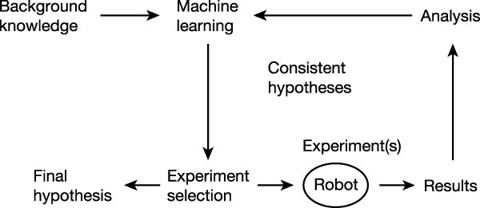
Nature, 2004. [All Versions]. This paper describes a physically implemented robotic system that applies techniques from artificial intelligence to carry out cycles of scientific experimentation. The system automatically originates hypotheses to explain observations, devises…
- from
- AGI & CoCoSci
- added
- 2026-10-10
- likes
- 0
similar
-
Towards end-to-end automation of AI research nature.com
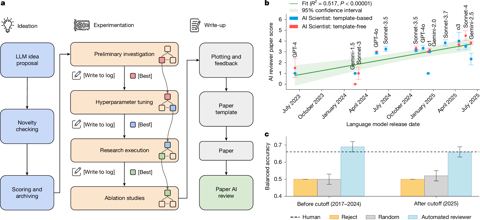
Nature, 2026. [All Versions]. The automation of science is a long-standing ambition in artificial intelligence (AI) research. Although the community has made substantial progress in automating individual components of the scientific process, a system that autonomously navigates…
-
Balancing autonomy and expertise in autonomous synthesis laboratories nature.com
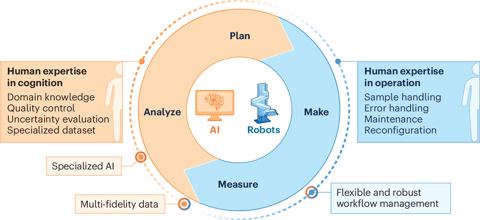
Nature Computational Science, 2025. [All Versions]. Autonomous synthesis laboratories promise to streamline the plan–make–measure–analyze iteration loop. Here, the authors comment on the barriers in the field, the promise of a human on-the-loop approach, and strategies for…
-
A dynamic knowledge graph approach to distributed self-driving laboratories nature.com
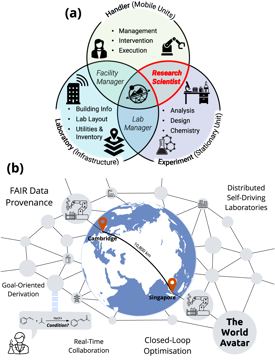
Nature Communications, 2024. [All Versions]. This work employs ontologies to capture data and material flows in design-make-test-analyse cycles, utilising autonomous agents as executable knowledge components to carry out the experimentation workflow. Data provenance is recorded…
-
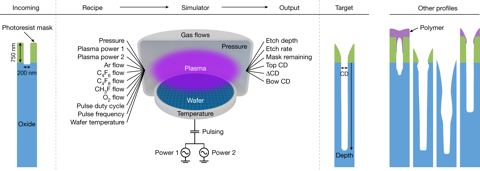
Human–machine collaboration for improving semiconductor process development nature.com
Nature, 2023. [All Versions]. [Nature News]. This work studies Bayesian optimization algorithms to investigate how artificial intelligence (AI) might decrease the cost of developing complex semiconductor chip processes. In particular, this work create a controlled virtual…
-
Exploration: from machines to humans sciencedirect.com
Current Opinion in Behavioral Sciences, 2020. [All Versions].
-
Machine-generated theories of human decision-making cpb-us-w2.wpmucdn.com
Science, 2021. [All Versions].
AGI & CoCoSci › Papers > Abduction > Applications in AI: “Nature, 2004. [All Versions]. This paper describes a physically implemented robotic system that applies techniques from artificial intelligence to carry out cycles of scientific experimentation. The system automatically originates hypotheses to explain observations, devises…”