Programming
Software development: programming languages, coding, libraries and frameworks, software engineering and architecture, source control, developer tools, databases, and infrastructure.
-
Perfect Workflow in Sublime Text 2 code.tutsplus.com
-
Progamming Fonts blog.codinghorror.com
-
Joe Armstrong - A week with Elixir joearms.github.io
-
Elixir School elixirschool.com
-
Elixir Koans elixirkoans.io
-
Elixir Radar Newsletter elixir-radar.com
-
Cave Culling Algorithm in Minecraft tomcc.github.io
-
Tetris in Clojure shaunlebron.github.io
-
Melkman's Algorithm interactively explained maxgoldste.in
-
Visualizing sorting algorithms corte.si
-
@hackerkid github.com
-
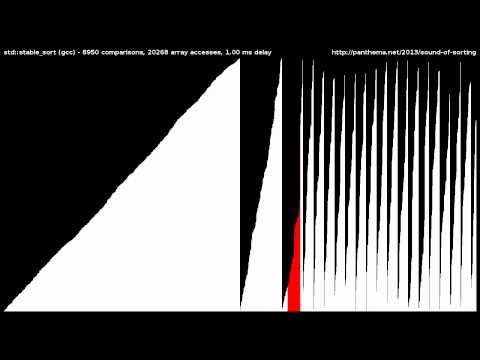
15 Sorting Algorithms in 6 Minutes youtube.com
-
Design and Analysis of Algorithms, 2015 youtube.com
-
Introduction to Algorithms, 2011 youtube.com
-
Computer Sc - Programming and Data Structure youtube.com
-
Algorithms youtube.com
-
A Visual Guide to Graph Traversal Algorithms workshape.github.io
-
Algorithm Wiki by Will Thimbleby will.thimbleby.net
-
Intro to Algorithms udacity.com
-
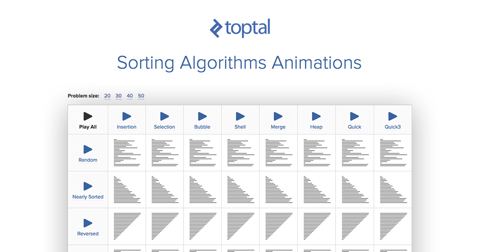
Sorting Algorithms Animations toptal.com
-
How algorithms shape our world ted.com
-
Google Summer of Code summerofcode.withgoogle.com
-
Rosalind rosalind.info
-
-
-
Programmers programmers.co.kr
-
Top 10 Algorithms for Coding Interview programcreek.com
-
Mental Representations: A Dual Coding Approach zh.pb1lib.org
Oxford University Press, 1990. [All Versions]. The original book on dual coding theory, in the neuroscience account of mental representation.
-
Leveraging Language for Abstraction and Program Search vigilworkshop.github.io
ICML'20, 2020. [All Versions].
-
The complete guide to (external) Domain Specific Languages tomassetti.me
. An introduction to Domain Specific Languages (DSL) based on 19 DSL cases.
-
Dual coding of knowledge in the human brain sciencedirect.com
Trends in Cognitive Sciences, 2021. [All Versions]. Yanchao Bi's review on neuroscience experiments on dual coding theory.
-
iContractML 2.0: A domain-specific language for modeling and deploying smart contracts onto multiple blockchain… sciencedirect.com
Information and Software Technology, 2022. [All Versions]. Smart contracts play a vital role in many fields. Despite being called smart, the development of smart contracts is a tedious task beyond defining a set of contractual rules. In addition to business knowledge, coding a…
-
ACLP: Abductive Constraint Logic Programming sciencedirect.com
The Journal of Logic Programming, 1999. [All Versions]. This paper presents the framework of Abductive Constraint Logic Programming (ACLP), which integrates Abductive Logic Programming (ALP) and Constraint Logic Programming (CLP). In ACLP, the task of abduction is supported and…
-
Quantifying usability of domain-specific languages: An empirical study on software maintenance sciencedirect.com
Journal of Systems and Software, 2015. [All Versions]. A DSL aims to support software development by offering abstractions to a particular domain. It is expected that DSLs improve the maintainability of artifacts otherwise produced with general-purpose languages. However, the…
-
Domain-Specific Languages: A Systematic Mapping Study sciencedirect.com
Information and Software Technology, 2016. [All Versions]. This study reports on a Systematic Mapping Study (SMS) for Domain-Specific Languages (DSLs). The main objective of the described work was to perform an SMS on DSLs to better understand the DSL research field, identify…
-
The structure-mapping engine: Algorithm and examples sciencedirect.com
Artificial Intelligence, 1989. [All Versions]. A computational implementation of analogy.
-
Qualitative Simulation sciencedirect.com
Artificial Intelligence, 1986. [All Versions]. [Preprint]. This paper presents a precise definition of qualitative structure and behavior descriptions as abstractions of differential equations and continuously differentiable functions. The authors present a new algorithm for…
-
A principal odor map unifies diverse tasks in olfactory perception science.org
Science, 2023. [All Versions]. [Code]. [Data (Reproduced)]. [Preprint]. [GoodScents Database]. [Leffingwell Database]. Mapping molecular structure to odor perception is a key challenge in olfaction. This work used graph neural networks to generate a principal odor map (POM)…
-
Digitization and validation of a chemical synthesis literature database in the ChemPU science.org
Science, 2022. [All Versions]. [Preprint]. This paper presents an automatically executable chemical reaction database of 100 molecules representative of the range of reactions found in contemporary organic synthesis. The chemical reaction codes or χDLs for the reactions have…
-
A universal system for digitization and automatic execution of the chemical synthesis literature science.org
Science, 2020. [All Versions]. [Preprint]. [XDL Documentation]. [XDL Schema Database]. This paper reports a software platform that uses natural language processing to translate the organic chemistry literature directly into editable code, which in turn can be compiled to drive…
-
Organic synthesis in a modular robotic system driven by a chemical programming language science.org
Science, 2019. [All Versions]. [Preprint]. [Perspective: Democratizing synthesis by automation]. This paper develops an autonomous compiler and robotic laboratory platform to synthesize organic compounds on the basis of standardized methods descriptions. The platform comprises…
-
Reconfigurable system for automated optimization of diverse chemical reactions science.org
Science, 2018. [All Versions]. [Preprint]. This paper describes a plug-and-play, continuous-flow chemical synthesis system that mitigates this challenge with an integrated combination of hardware, software, and analytics. The system software controls the user-selected reagents…
-
Human-level concept learning through probabilistic program induction science.org
Science, 2015. [All Versions]. [Preprint]. [Supplementary Material]. People learning new concepts can often generalize successfully from just a single example, yet machine learning algorithms typically require tens or hundreds of examples to perform with similar accuracy…
-
From language development to language evolution: A unified view of human lexical creativity science.org
Science, 2023. [All Versions]. [Preprint]. This work supports a unified foundation for human lexical creativity underlying both the fleeting products of individual ontogeny and the evolutionary products of phylogeny across languages.
-
A Generalized Earley Parser for Human Activity Parsing and Prediction scholar.google.com
IEEE Transactions on Pattern Analysis and Machine Intelligence, 2020. [All Versions]. Detection, parsing, and future predictions on sequence data (e.g., videos) require the algorithms to capture non-Markovian and compositional properties of high-level semantics. Context-free…
-
DreamCoder: growing generalizable, interpretable knowledge with wake–sleep Bayesian program learning royalsocietypublishing.org
Philosophical Transactions of the Royal Society A, 2023. [All Versions]. [Preprint]. This paper presents DreamCoder, a system that learns to solve problems by writing programs. It builds expertise by creating domain-specific programming languages for expressing domain concepts…
-
Chemputation and the Standardization of Chemical Informatics pubs.acs.org
Journal of the American Chemical Society (Au), 2021. [All Versions]. This paper describes a standard hardware (the chemical processing programming architecture --- the ChemPU) to encompass all chemical synthesis, an approach which unifies all chemistry automation strategies…
-
Artificial Intelligence for Retrosynthetic Planning Needs Both Data and Expert Knowledge pubs.acs.org
Journal of the American Chemical Society, 2024. [All Versions]. The development of AI synthesis planners trained solely on reaction-example-data has stagnated and is not on par with the performance of “hybrid” algorithms combining AI with expert knowledge. This Perspective…
-
A Logic Programming Language for Computational Nucleic Acid Devices pubs.acs.org
ACS Synthetic Biology, 2018. [All Versions]. This paper presents a logic programming language that allows a broad range of computational nucleic acid systems to be designed and analyzed. The language extends standard logic programming with a novel equational theory to express…
-
Tools, language and cognition in human evolution psycnet.apa.org
Cambridge University Press, 1993. [All Versions]. A classic perspective correlating human tool use with the evolution of civilization.
- next page of items loading…