Quantifying artificial intelligence through algorithmic generalization
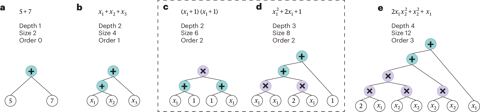
Nature Machine Intelligence, 2025. [All Versions]. The rapid development of artificial intelligence (AI) systems has created an urgent need for their scientific quantification. While their fluency across a variety of domains is impressive, AI systems fall short on tests…
- from
- AGI & CoCoSci
- added
- 2026-10-10
- likes
- 0
similar
-
Scientific discovery in the age of artificial intelligence nature.com
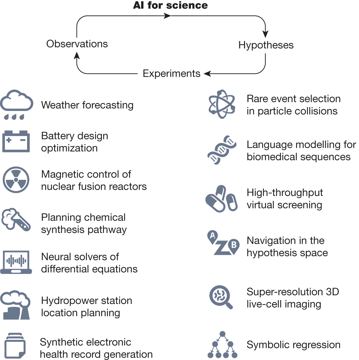
Nature, 2023. [All Versions]. A review article that examines breakthroughs over the past decade that include self-supervised learning, which allows models to be trained on vast amounts of unlabelled data, and geometric deep learning, which leverages knowledge about the…
-
Embodied large language models enable robots to complete complex tasks in unpredictable environments nature.com
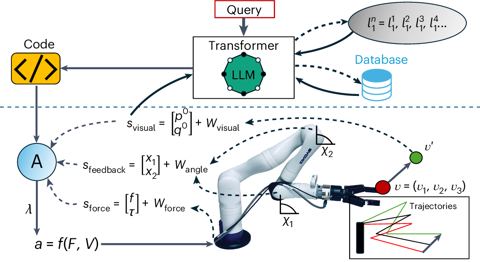
Nature Machine Intelligence, 2025. [All Versions]. Completing complex tasks in unpredictable settings challenges robotic systems, requiring a step change in machine intelligence. Sensorimotor abilities are considered integral to human intelligence. Thus, biologically inspired…
-
-
How variability shapes learning and generalization pure.mpg.de
Trends in Cognitive Sciences, 2022. [All Versions]. A comprehensive review on the trade-off between variability and generalization ability.
-
Phy-Q as a measure for physical reasoning intelligence nature.com
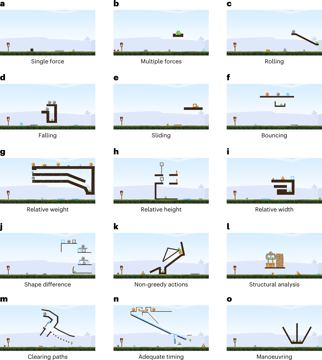
Nature Machine Intelligence, 2023. [NMI Challenge]. An interactive benchmark for AI physical reasoning.
-
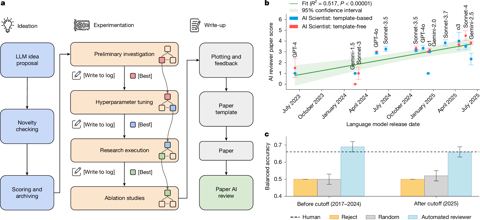
Towards end-to-end automation of AI research nature.com
Nature, 2026. [All Versions]. The automation of science is a long-standing ambition in artificial intelligence (AI) research. Although the community has made substantial progress in automating individual components of the scientific process, a system that autonomously navigates…
AGI & CoCoSci › Papers > Complexity & Information Theory > Theory: “Nature Machine Intelligence, 2025. [All Versions]. The rapid development of artificial intelligence (AI) systems has created an urgent need for their scientific quantification. While their fluency across a variety of domains is impressive, AI systems fall short on tests…”