-
The Psychology of Design growth.design
An extensive list of cognitive biases and design principles with examples and tips to fine-tune your product and UX.
-
Google Engineering Practices google.github.io
Explains how to perform code reviews and how to submit them.
-
Paper we love: Software Engineering Organizations github.com
“The practice of software engineering, and its history is, itself, a complex study in humanity, coordination, and communication.”
-
How to exit vim, the Product Manager way github.com
A satire with a grain of truth, especially the comparison between the basic vs experienced level.
-
Code reviews at Google github.com
“Why Should Code Reviews Be Fast? (…) To optimize for the speed at which a team of developers can produce a product together, as opposed to optimizing for the speed at which an individual developer can write code.”
-
The 4 Worst Software Metrics Agitating Developers in 2019 gitclear.com
The worst KPIs to track a software team output: Lines of Code, Commit Count, Issues Resolved (aka “Shipping Velocity”) and Code Churn (aka "Efficiency").
-
How to be a Manager – A step-by-step guide to leading a team getweeklyupdate.com
A full, detailed guide on modern management practices.
-
The Best Way to Make Intelligent Decisions fs.blog
A collection of 109 models.
-
-
Gigerenzer's simple rules foundingfuel.com
The reason we often relies on these simple heuristics: “outside the lab, in real world, we cannot do well with just with logical rationality, we need ecological rationality - the kind of thinking that helps us get what we want in an environment that's uncertain and dynamic…
-
Flying Circus Platform - Disaster recovery flyingcircus.io
Critical infrastructure which aims to be available 24/7 needs a Disaster Recovery Plan. It generally takes the form of a document providing an overview of the expected severe failures and a set of procedures on how the system and the team operating it is prepared to deal with…
-
The Efficiency-Destroying Magic of Tidying Up flocrivello.com
“Efficiency tends to look messy, and good looks tend to be inefficient.” A reminder that sometimes we should just accept the messiness of the world.
-
Army Leadership and the Profession fas.org
Establishes and describes what leaders should be and do.
-
What Makes A Great Software Engineer? faculty.washington.edu
Doesn't conclude on a definitive answer to the question, but details a model based on 53 attributes (!). Still a good source referencing other papers on the topic.
-
HiPPO FAQ exp-platform.com
HiPPO stands for “Highest Paid Person's Opinion”, a trait of dysfunctional culture, in which power politics trumps data.
-
Building a data team at a mid-stage startup: a short story erikbern.com
Story of a manager trying to distill the concepts of a data-driven company while growing a tiny team of 3 people. Each step covers the evolution of the technical pipeline and interactions with existing stakeholders.
-
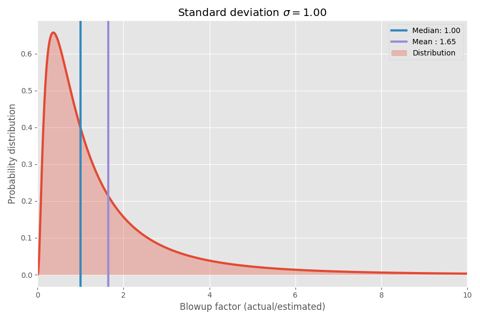
Why software projects take longer than you think: a statistical model erikbern.com
“Confirms the hunch that developers estimate the median well, but the mean ends up being much higher.”
-
Why I Never Hire Brilliant Men en.wikisource.org
5 simple rules for hiring men, from 1924. Things haven't changed a lot in a century.
-
Yes, and… en.wikipedia.org
“A rule-of-thumb in improvisational comedy (…). It is also used in business and other organizations as a principle that improves the effectiveness of the brainstorming process, fosters effective communication, and encourages the free sharing of ideas.”
-
Chesterton's fence en.wikipedia.org
“If you're considering nominating something for deletion, or changing a policy, because it doesn't appear to have any use or purpose, research its history first.” It's not we'd like to play conservative here, but because we need to fix the knowledge hole as described above.
-
The Prince en.wikipedia.org
Machiavelli's ideas on how to accrue honor and power as a leader. Resorting to that level of politics in a company is a sure way to render the culture highly toxic, as well as corrupting and demoralizing the organization at all levels.
-
Selectorate theory en.wikipedia.org
“In selectorate theory, three groups of people affect leaders. These groups are the nominal selectorate, the real selectorate, and the winning coalition. (…) To remain in power, leaders must maintain their winning coalition.”
-
Second-system effect en.wikipedia.org
“Tendency of small, elegant, and successful systems, to be succeeded by over-engineered, bloated systems”.
-
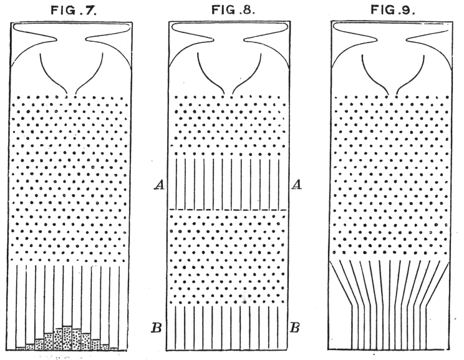
Regression toward the mean en.wikipedia.org
Or why after a period of intense euphoria and ambition, things slowly get back to their usual mediocrity.
-
Osborne effect en.wikipedia.org
“A social phenomenon of customers canceling or deferring orders for the current soon-to-be-obsolete product as an unexpected drawback of a company's announcing a future product prematurely.” This is the price to pay for hasty marketing actions.
-
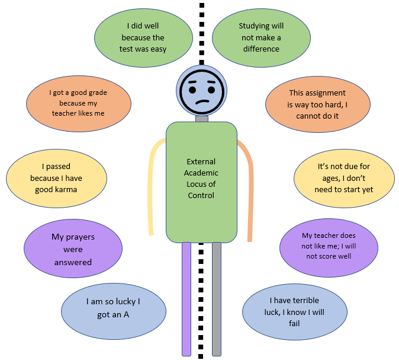
Locus of control en.wikipedia.org
A framework on “the degree to which people believe that they have control over the outcome of events in their lives, as opposed to external forces beyond their control.”
-
Hanlon's razor en.wikipedia.org
“Never attribute to malice that which is adequately explained by stupidity.” My favorite flavor of Occam's Razor, and a crucial mantra to defuse rampant paranoia in a highly political setting.
-
Escalation of commitment en.wikipedia.org
A.k.a. sunk-cost fallacy, or the rational explanation of why the hell do we still irrationally keep investing in a bad project.
-
Circulation of elite en.wikipedia.org
“Changes of regime, revolutions, and so on occur not when rulers are overthrown from below, but when one elite replaces another.”
-
Baumol en.wikipedia.org
in action.” (source) - Explains how the pool of professional managers gets distributed into the various sectors of the economy.
-
Embedded Rules of Thumb embeddedartistry.com
Guidelines and heuristics to provide a reasonable approximation of the truth while developing embedded devices. Most also applies to software projects in general.
-
How do managers get stuck? elidedbranches.com
Identify scenario preventing managers to be promoted at the next level.
-
Building and Motivating Engineering Teams elidedbranches.com
What DO engineers want? Money, purpose and respect.
-
Founder to CEO docs.google.com
You can build you own career engine, starting as a technical founder of a startup, building a great team, then grow with the company to learn and become a full-fledge CEO.
-
What nobody tells you about documentation divio.com
There is four kinds of documentation: tutorials, how-to guides, explanation and reference. Each with their own structure and mode of writing.
-
Technical Writing Courses developers.google.com
This collection of courses and learning resources aims to improve your technical documentation. Learn how to plan and author technical documents. You can also learn about the role of technical writers in a company.
-
3 tricks to start working despite not feeling like it deprocrastination.co
“'Screw it, let's do it'; Start sloppy; Start small”.
-
Tech Due Diligence Calculator decodingvc.gitbooks.io
A list of questions by topic to help understand how you are building your tech and engineering team, trying to highlight red flags.
-
Technical debt as a lack of understanding daverupert.com
“The problem lies in "never reorganizing (the code) to reflect your understanding." (…) Organizationally, you pay in velocity and turnover; talented people are going to leave after a few rounds of bullshit.”
-
The Heilmeier Catechism darpa.mil
A simple set of question which helped DARPA evaluates research programs to generate big rewards by taking big risks.
-
Normalization of deviance danluu.com
Explores how the factors accounting for disasters accumulates unnoticed until it's too late. This has been studied on other fields, but not in software engineering.
-
5 Things I've Learned in 20 Years of Programming daedtech.com
“A programmer with 5 years of experienced has more industry tenure than half of the entire industry.” Also see this follow-up comment of 10 things I've learned after 35 years.
-
The Prosperous Software Consultant dabit3.medium.com
This article let you understand how an independent consultant operates.
-
Mistakes I've Made as an Engineering Manager css-tricks.com
Mistakes: “1) Thinking people give feedback the way they want to receive it; 2) Trying to do everything yourself; 3) Communicating something one time is enough; 4) You have to have everything together all the time.”
-
Learning Technical Writing Using the Engineering Method cs.tufts.edu
An alternative approach, involving a weekly meeting of a writing group. An interesting dynamic to gather feedback and experience.
-
Tips for Writing Technical Papers cs.stanford.edu
Another set of tips, specifically using the example of a technical paper describing an improvement of an algorithm.
-
I've Built Multiple Growth Teams. Here's Why I Won't Do It Again. conversionxl.com
“Few folks understand probability, and most executives don't care about the data, regardless of what it says.”
-
The Toxic Handler: Organizational Hero — and Casualty companiesalive.com
“toxic handler, a manager who voluntarily shoulders the sadness, frustration, bitterness, and anger that are endemic to organizational life. Although toxic handlers may be found at every level in organizations, many work near the top”.
-
To Get Good, Go After The Metagame commoncog.com
“Every sufficiently interesting game has a metagame above it. This is the game about the game. It is often called 'the meta'. (…) The meta is what you get after you master boring fundamentals. But observing the state of the current meta often reveals what boring fundamentals…
-
Sustainable Sources of Competitive Advantage collaborativefund.com
“The ability to learn faster than your competition; to empathize with customers more than your competition; to communicate more effectively than your competition; The willingness to fail more than your competition; to wait longer than your competition”.
- next page of items loading…