Philosophy
Philosophy and ideas: ethics, meaning, stoicism, consciousness, and big questions.
-
Mental Imagery plato.stanford.edu
Plato Stanford.
-
Logic Pluralism plato.stanford.edu
Plato Stanford. A computational philosophy account on Logic Pluralism, which is the view that there is more than one correct logic.
-
Logical Consequence plato.stanford.edu
Plato Stanford. A computational philosophy account on Logical Consequence, which is about the relation between premises and conclusions in valid arguments.
-
Paraconsistent Logic plato.stanford.edu
Plato Stanford. A computational philosophy account on Paraconsistent Logic, where any logic is paraconsistent as long as it is not explosive.
-
Logic and Ontology plato.stanford.edu
Plato Stanford. A computational philosophy account on logic and ontology, mainly about the intersections of logic and ontology in many significant philosophy problems.
-
Non-monotonic Logic plato.stanford.edu
Plato Stanford. A computational philosophy account on Non-monotonic Logic, a family of formal frameworks devised to capture and represent defeasible inference.
-
Modal Logic plato.stanford.edu
Plato Stanford. A computational philosophy account on Modal Logic, which is the study of the deductive behavior of the expressions 'it is necessary that' and 'it is possible that'.
-
Inductive Logic plato.stanford.edu
Plato Stanford. A computational philosophy account on Inductive Logic, which is a logic of evidential support.
-
Second-order and Higher-order Logic plato.stanford.edu
Plato Stanford.
-
The Emergence of First-Order Logic plato.stanford.edu
Plato Stanford. A computational philosophy account on the emergence of first-order logic, mainly about first-order logic is natural retrospect.
-
Epistemic Logic plato.stanford.edu
Plato Stanford. A computational philosophy account on Epistemic Logic, which is a subfield of epistemology concerned with logical approaches to knowledge, belief and related notions.
-
Dialogical Logic plato.stanford.edu
Plato Stanford. A computational philosophy account on dialogical logic, which is a dialogue-based approach to logic and argumentation rooted in a research tradition that goes back to dialectics in Greek Antiquity, when problems were approached through dialogues in which…
-
The Language of Thought Hypothesis plato.stanford.edu
Plato Stanford. A computational philosophy account on the laugnage of though hypothesis, which proposes that thinking occurs in a mental language.
-
The Analysis of Knowledge plato.stanford.edu
Plato Stanford.
-
Intentionality plato.stanford.edu
Plato Stanford.
-
Bayesian Epistemology plato.stanford.edu
Plato Stanford. A computational philosophy account on the nature of uncertainty modeling in Bayesian Epistemology.
-
Epistemology plato.stanford.edu
Plato Stanford.
-
Embodied Cognition plato.stanford.edu
Plato Stanford. A computational philosophy account on Embodied Cognition, which emphasizes the significance of an agent's physical body in cognitive abilities.
-
Externalism About the Mind plato.stanford.edu
Plato Stanford. A computational philosophy account on mind externalism, a long-term debate about the boundary of embodied intelligence.
-
Causal Theories of Mental Content plato.stanford.edu
Plato Stanford. A computational philosophy account on causal theories of mental content, which attempts to explain how thoughts can be about things.
-
Concepts plato.stanford.edu
Plato Stanford. A collection of the computational philosophical debates about the concepts.
-
Compositionality plato.stanford.edu
Plato Stanford. A computational philosophy account on compositionality, one of the distinctive feature of language.
-
Common Knowledge plato.stanford.edu
Plato Stanford.
-
Causal Models plato.stanford.edu
Plato Stanford. A computational philosophy account on Causal models, which are mathematical models representing causal relationships within an individual system or population.
-
Bounded Rationality plato.stanford.edu
Plato Stanford. A computational philosophy account on Bounded Rationality, an elementary hypothesis of human intelligence in psychology and ecology.
-
Abduction plato.stanford.edu
Plato Stanford. A computational philosophy account on Abduction, one of the three thinking patterns besides Induction and Deduction, being unique for its potential to introduce new ideas into current knowledge.
-
Abduction and styles of scientific thinking link.springer.com
Synthese, 2021. [All Versions]. A computational philosophy account connecting Abduction and scientific thinking.
-
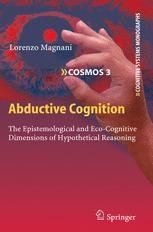
Abductive Cognition: The Epistemological and Eco-Cognitive Dimensions of Hypothetical Reasoning link.springer.com
Springer, 2009. [All Versions]. Most philosophers of science in the twentieth century have concluded that no logic of creative processes exists and, moreover, that a rational model of discovery is impossible. In short, scientific creative inferences are irrational and there is…
-
Patterns of abduction link.springer.com
Synthese, 2007. [All Versions]. A categorization for Abduction in the account of pure philosophy.
-
When Lingens meets Frege: communication without common ground link.springer.com
Philosophical Studies, 2021. [All Versions].
-
Defending Abduction journals.uchicago.edu
Philosophy of Science, 1999. [All Versions].
-
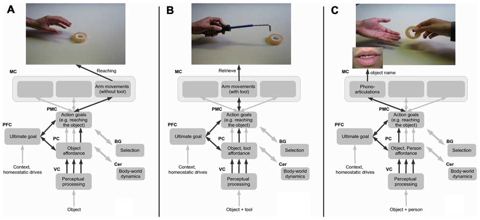
The embodied mind extended: using words as social tools frontiersin.org
Frontiers in Psychology, 2013. [All Versions].
-
What is consciousness, and could machines have it? doi.org
Science, 2017. [All Versions]. A perspective on the two levels of consciousness in machine intelligence.
-
HCI Research as Problem-Solving dl.acm.org
ACM SIGCHI'16, 2016. [All Versions]. This essay contributes a meta-scientific account of human-computer interaction (HCI) research as problem-solving. We build on the philosophy of Larry Laudan, who develops problem and solution as the foundational concepts of science. We argue…
-
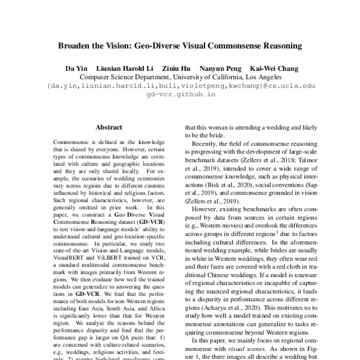
Broaden the Vision: Geo-Diverse Visual Commonsense Reasoning aclanthology.org
EMNLP'21, 2021. [All Versions].
-
Philosophical Writings of Peirce 4lib.org
Courier Corporation, 1955. [All Versions]. Original writings by C. S. Peirce, the philosopher who first introduces the concept of Abduction.
-
Maturana, H. R., & Varela, F. J. (2008). The tree of knowledge: the biological roots of human understanding. Boston… worldcat.org
The book is an exposition of the non-representational vew of knowledge.
-
Mathematics and AI sites.math.washington.edu
University of Washington Fall 2025 graduate course with public slides, Lean examples, projects, and readings on machine learning, formalization, autoformalization, mathematical discovery, and ethics.
-
Set Theory on the Stanford Encyclopedia of Philosophy plato.stanford.edu
Peer-reviewed overview of set theory with historical context and references.
-
-
-
6.893 Philosophy and Theoretical Computer Science. MIT stellar.mit.edu
It examines the relevance of modern theoretical computer science to traditional questions in philosophy, and conversely, what philosophy can contribute to theoretical computer science.
-
Floyd & Bokulich. Philosophical Explorations of the Legacy of Alan Turing: Turing 100 springer.com
Turing’s place in the history and philosophy of science.
-
Aaronson. Why Should Philosophers Care About Computational Complexity Theory scottaaronson.com
It argues that computational complexity theory leads to new perspectives on the nature of mathematical knowledge and other philosophical questions.
-
Stanford Encyclopedia of Philosophy. Computational Complexity Theory plato.stanford.edu
The foundations of complexity theory, and its potential significance on philosophy of computer science, philosophy of mathematics and epistemology.
-
Copeland, Posy & Shagrir (editors). Computability: Turing, Gödel, Church, and Beyond mitpress.mit.edu
Computer scientists, mathematicians, and philosophers discuss the conceptual foundations of the notion of computability as well as recent theoretical developments.
-
Lacona. LOGIC: Lecture Notes for Philosophy, Mathematics, and Computer Science link.springer.com
Suitable for undergraduate introductions to logic and early graduate courses on logic.
-
Philip Davis. Toward a Philosophy of Computation jstor.org
Philosophical implication of mathematization and computerization of the world.
-
Deutsch. The Fabric of Reality: The Science of Parallel Universes and Its Implications daviddeutsch.org.uk
The Fabric of Reality presents a startlingly integrated, rational and optimistic world view – the result of taking seriously the deepest ideas of modern science and the philosophy of science.
-
Walter Dean. Computational Complexity Theory and the Philosophy of Mathematics academic.oup.com
It highlights the significance of complexity theory relative to questions traditionally asked by philosophers of mathematics while also attempting to isolate some new ones.
- next page of items loading…