ZettelForge
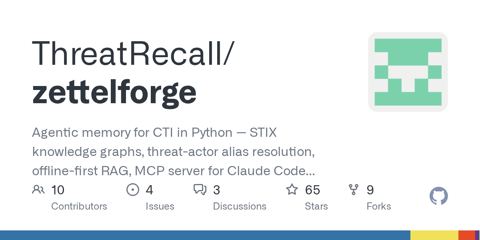
Agentic memory system that treats Sigma and YARA rules as first-class memory entities, with an LLM rule explainer, STIX 2.1 knowledge graph of CTI entities, and offline-first RAG to connect rules to the actors and techniques they detect. Python, MIT.
- from
- Detection Engineering
- added
- 2026-10-10
- likes
- 0
similar
-
kgai github.com
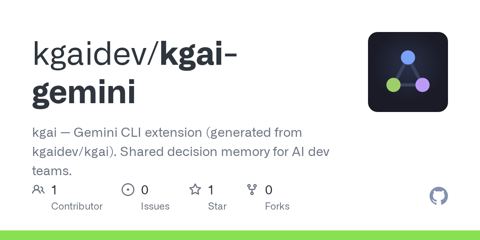
Shared decision memory for AI dev teams: your agent records why the code changed (and the dead ends it ruled out), recalls it before the next edit, and syncs it across the team without merge conflicts. Local-first, immutable, engine installs itself on first run.
-
Hindsight hindsight.vectorize.io
State-of-the-art long-term memory for AI agents by Vectorize. Open source, self-hostable, with integrations for LangChain, CrewAI, MCP, and more. Gives financial trading agents persistent memory across sessions.
-
akitaonrails/ai-memory github.com
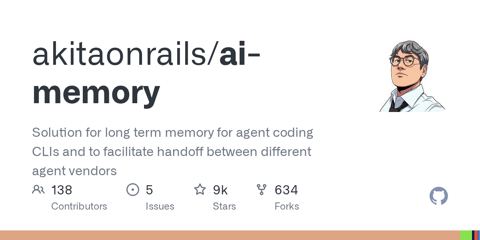
Long-term memory for AI coding agents: a git-backed markdown wiki with automatic lifecycle capture, cross-agent handoffs, and a self-hosted MCP server.
-
Knowledge Graph Memory github.com
Create a local knowledge graph for your agent to remember information across different chat sessions.
-
Fletch fletch.sh
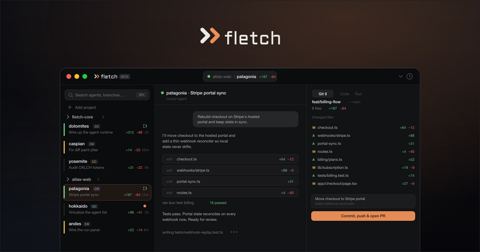
Native IDE for AI coding agents, giving each agent a sandboxed clone of your repository plus a shared symbol and call-graph index, with diff review before merge.
-
Agent Threat Rules (ATR) github.com
An open MIT detection-rule standard for AI-agent and MCP attacks (prompt injection, tool poisoning, context exfiltration), like Sigma or YARA for the agent layer, with OWASP LLM/Agentic and MITRE ATLAS mappings on each rule.

Detection Engineering › Concepts & Frameworks: “Agentic memory system that treats Sigma and YARA rules as first-class memory entities, with an LLM rule explainer, STIX 2.1 knowledge graph of CTI entities, and offline-first RAG to connect rules to the actors and techniques they detect. Python, MIT.”