Functional neuroanatomy of intuitive physical inference
Proceedings of the National Academy of Sciences, 2016. [All Versions]. A piece of evidence for the functional part of intuitive physics in human brain.
- from
- AGI & CoCoSci
- added
- 2026-10-10
- likes
- 0
similar
-
Limits on Simulation Approaches in Intuitive Physics sciencedirect.com
Cognitive Psychology, 2021. [All Versions]. Ernest Davis's perspective against intuitive physics, that physcial reasoning is logical reasoning instead of intuition.
-
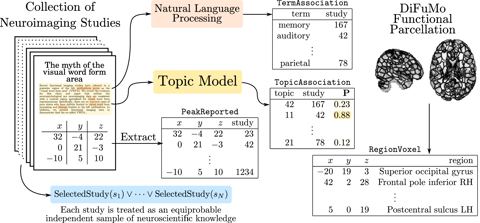
Meta-analysis of the functional neuroimaging literature with probabilistic logic programming nature.com
Scientific Reports, 2022. [All Versions]. Inferring reliable brain-behavior associations requires synthesizing evidence from thousands of functional neuroimaging studies through meta-analysis. However, existing meta-analysis tools are limited to investigating simple…
-
Intuitive Physics: Current Research and Controversies sciencedirect.com
Trends in Cognitive Sciences, 2018. [All Versions]. Hongjing Lu's review on intuitive physics.
-
Foundations of intuitive power analyses in children and adults eccl.mit.edu
Nature Human Behavior, 2022. [All Versions]. Evidences support that people have some of the foundations for 'intuitive power analyses', which help people use intuitive statistical reasoning and metacognitive strategies to estimate how much information they might need to solve…
-
Simulation as an engine of physical scene understanding pnas.org
Proceedings of the National Academy of Sciences, 2013. [All Versions]. [Appendix]. The first attempt to computationally simulate intuitive physics.
-
Mind Games: Game Engines as an Architecture for Intuitive Physics sciencedirect.com
Trends in Cognitive Sciences, 2017. [All Versions]. Tomer Ullman's review on simulation-based intuitive physics.
AGI & CoCoSci › Papers > Commonsense > Intuitive Physics: “Proceedings of the National Academy of Sciences, 2016. [All Versions]. A piece of evidence for the functional part of intuitive physics in human brain.”