Computer Science
7,622 items in 38 lists
-
RPMM cran.r-project.org
-
ROCR cran.r-project.org
-
REEMtree cran.r-project.org
-
LogicReg cran.r-project.org
-
LiblineaR cran.r-project.org
-
L0Learn cran.r-project.org
-
GMMBoost cran.r-project.org
-
GAMBoost cran.r-project.org
-
ElemStatLearn cran.r-project.org
-
Cubist cran.r-project.org
-
CORElearn cran.r-project.org
-
C50 cran.r-project.org
-
Boruta cran.r-project.org
-
OCLint oclint.org
A static source code analysis tool to improve quality and reduce defects for C, C++ and Objective-C. - source
-
Nettle lysator.liu.se
A low-level cryptographic library. [LGPL]
-
GnuPG gnupg.org
A complete and free implementation of the OpenPGP standard. [GPL]
-
Deleaker deleaker.com
A tool for resource leak detection, including memory, GDI and handle leaks.
-
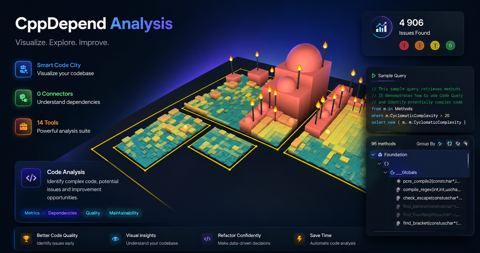
CppDepend cppdepend.com
Simplifies managing a complex C/C++ code base by analyzing and visualizing code dependencies, by defining design rules, by doing impact analysis, and comparing different versions of the code.
-
ceres-solver ceres-solver.org
C++ library for modeling and solving large complicated nonlinear least squares problems from google. [BSD]
-
Botan botan.randombit.net
A crypto library for C++. [BSD-2]
-
Bcrypt bcrypt.sourceforge.net
A cross platform file encryption utility. Encrypted files are portable across all supported operating systems and processors. [BSD]
-
MXNet - Clojure API mxnet.apache.org
-
goimports pkg.go.dev
Tool to fix (add, remove) your Go imports automatically.
-
Cryptography & Hashing wiki.haskell.org
-
Haskell MOOC haskell.mooc.fi
An online course on functional programming with Haskell programming language, and a live interactive Telegram community.
-
plotly plot.ly
A Python library that makes interactive and publication-quality graphs.
-
Idris idris-lang.org
, a new Haskell-inspired language with unprecedented support for type-driven development.
-
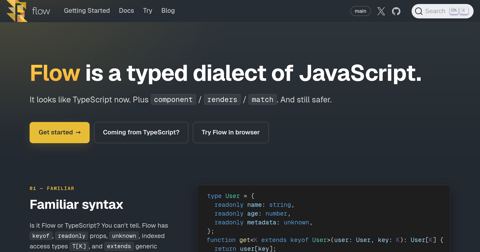
Flow.js flow.org
A static type checker for JavaScript.
-
dimple.js dimplejs.org
-
MCP modelcontextprotocol.io
Model Context Protocol for AI agent-to-tool connectivity. Standardizes how AI agents discover and interact with external tools, data sources, and APIs. Created by Anthropic, governed by the Linux Foundation.
-
Lex aws.amazon.com
An AWS service for building conversational interfaces for applications using voice and text.
-
Windsurf windsurf.com
AI code editor with agentic coding, autocomplete, and MCP support.
-
Keybase keybase.io
Secure groups, files, and chat for everyone!
-
.NET Analyzers github.com
An organization for the development of analyzers (diagnostics and code fixes) using the .NET Compiler Platform.
-
Tagging systems (2006) patents.google.com
Introduces QPV under the name of 'quantum tagging'.
-
Position-based quantum cryptography and catalytic computation (2016) eprints.illc.uva.nl
Chapter 5 independently generalises BB84 QPV to more input bases. Chapter 4 provides an efficient attack on the protocol based on interleaved unitaries.
-
Instantaneous non-local computation of low T-depth quantum circuits (2016) doi.org
Provides a general attack on QPV using an exponential amount of pre-shared EPR pairs in the number of T-gates or T-depth based on the circuit decomposition of the task unitary into Clifford+T gates.
-
Beating classical impossibility of position verification (2022) doi.org
Constructs a QPV protocol with only classical input and output information from the assumption that LWE is quantum-hard. Shows unconditional security in the random oracle model.
-
Relating non-local quantum computation to information theoretic cryptography (2023) doi.org
Connects $f$-routing to topics in classical cryptography, in particular conditional disclosure of secrets. Shows a sub-exponential upper bound for attacks for any $f$ and finds an $f$ that is believed to be outside of $\mathsf{P}$ (with pre-processing), but efficiently attacked.
-
Code-routing: A new attack on position verification (2023) doi.org
Provides a new attack on $f$-routing, connecting attacks to secret-sharing schemes and span programs, and showing that any $f \in \mathsf{Mod}_p\mathsf{L}$ (with pre-processing), for $p$ prime, can be attacked efficiently.
-
Complexity and entanglement in non-local computation and holography (2022) doi.org
Notes that the necessary attack resource requirements are controlled by the entangled part of the task unitary. Shows that for tasks where one side is classical input information, a doubly-logarithmic (later improved to logarithmic) lower bound and exponential upper bound (in…
-
The garden-hose model (2013) doi.org
Studies attacks on $f$-routing and introduces garden-hose complexity to connect attacks on $f$-routing to complexity theory. Provides many first results regarding that connection, for example that any $f \in \mathsf{L}$ (with pre-processing) can be attacked efficiently.
-
Position-based quantum cryptography: Impossibility and constructions (2011) doi.org
Shows security against unentangled attacks.
-
Bounds on instantaneous non-local quantum computation (2020) doi.org
Shows that any 2-qubit unitary can be attacked up to error $\varepsilon$ using $\log(1/\varepsilon)$ EPR pairs and that any hermitian bipartite binary controlled unitary can be attacked with 1 EPR pair. Shows logarithmic lower bound on entanglement entropy for general bipartite…
-
Quantum location verification in noisy channels (2010) doi.org
Studies QPV based on Bell states, GHZ states and entanglement swapping. Studies the effect of noise/decoherence.
-
Tightly characterises the secure region of the protocol depending on the loss and error rates.
-
Loss-tolerant quantum secure positioning with weak laser sources (2016) doi.org
Studies a version of the protocol with separable inputs. Proves full loss tolerance and studies practical implementation based on decoy states.
-
Popescu-Rohrlich correlations imply efficient instantaneous nonlocal quantum computation (2016) doi.org
Shows that if attackers share PR boxes, then any unitary can be attacked using only linear entanglement and a linear number of PR box uses.
-
Practical position-based quantum cryptography (2015) doi.org
Considers the case where the two input bases are related by a unitary $U$.
-
Loss-tolerant position-based quantum cryptography (2015) doi.org
Generalises BB84 QPV to more input bases and notes better loss tolerance properties because of it. Also discusses using decoy states and continuous variables for BB84 QPV.
- next page of items loading…