-
The Extended Mind icds.uoregon.edu
Analysis, 1998. [All Versions]. The original paper on the debate of mind externalism.
-
Inference to the Best Explanation hps.cam.ac.uk
Routledge, 1991. [All Versions]. Lipton's original paper on Inference to the Best Explanation as a specialized condition of Abduction.
-
Scientific discovery: Computational explorations of the creative processes hk1lib.org
MIT Press, 1987. [All Versions]. The book is divided into four parts. Part I introduces the subject of discovery, defines the scope of our work, and discusses some of the issues that have surrounded and still surround our topic. Parts II and III contain the main body of our…
-
The Origin of Concepts hk1lib.org
Oxford University Press, 2009. [All Versions]. Susan Carey's extended book on the theory theory of concepts in child development.
-
Conceptual Change in Childhood hk1lib.org
MIT Press, 1985. [All Versions]. Susan Carey's book on the theory theory of concepts in child development.
-
Models of Discovery: And Other Topics in the Methods of Science hk1lib.org
Springer, 1977. [All Versions]. The original book on search as scientific thinking.
-
Deep Learning: How the Mind Overrides Experience hk1lib.org
Cambridge University Press, 2011. [All Versions].
-
Constraint relaxation and chunk decomposition in insight problem solving hf.uni-koeln.de
Journal of Experimental Psychology, 1999. [All Versions]. [APA].
-
Cognitive Science and Science Education harvardlds.org
American Psychologist, 1986. [All Versions]. Susan Carey's review on cognitive-science-based methodologies for science education research.
-
Asking and evaluating natural language questions gureckislab.org
CogSci'16, 2016. [All Versions]. A behavioral study for the battleship game.
-
Similarity involving attributes and relations: Judgments of similarity and difference are not inverses groups.psych.northwestern.edu
Psychological Science, 1990. [All Versions]. Theory on similarity judgement by attributes and relations.
-
Multi-task reinforcement learning in humans gershmanlab.com
Nature Human Behavior, 2021. [All Versions].
-
The successor representation in human reinforcement learning gershmanlab.com
Nature Human Behavior, 2017. [All Versions].
-
Computational rationality: A converging paradigm for intelligence in brains, minds, and machines gershmanlab.com
Science, 2015. [All Versions]. A comprehensive review on the rationality of Bayesian computational models.
-
Learning to act by integrating mental simulations and physical experiments gershmanlab.com
CogSci'21, 2018. [All Versions].
-
Galactica: A Large Language Model for Science galactica.org
Meta AI, 2022. [All Versions]. A large language model trained on large-scale scientific corpus.
-
Reasoning with cause and effect ftp.cs.ucla.edu
1998. Judea Pearl's tutorials on causal reasoning with operations on Bayesian networks.
-
Corel: A DSL for Cooking Recipes fse.studenttheses.ub.rug.nl
2021. [All Versions]. [Corel recipe page]. [International Network of Food Data Systems (INFOODS)]. The Corel DSL for cooking recipes enables understanding of and computation with ingredients, and can construct a nutrition label for the recipe.
-
What is intrinsic motivation? A typology of computational approaches frontiersin.org
Frontiers in Neurorobotics, 2009. [All Versions].
-
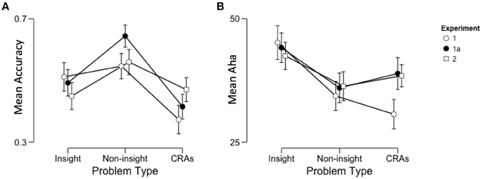
Insight Is Not in the Problem: Investigating Insight in Problem Solving across Task Types frontiersin.org
Frontiers in Psychology, 2016. [All Versions].
-
Probabilistic alternatives to Bayesianism: the case of explanationism frontiersin.org
Frontiers in Psychology, 2015. [All Versions]. A non-Bayesian account of Abduction.
-
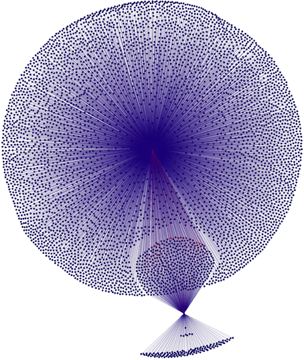
Using a high-dimensional graph of semantic space to model relationships among words frontiersin.org
Frontiers in Psychology, 2014. [All Versions]. The GOLD model (Graph Of Language Distribution) is a network model constructed based on co-occurrence in a large corpus of natural language that may be used to explore what information may be present in a graph-structured model of…
-
The embodied mind extended: using words as social tools frontiersin.org
Frontiers in Psychology, 2013. [All Versions].
-
Do six-month-old infants perceive causality? fitelson.org
Cognition, 1987. [All Versions].
-
The Implicit Association Test at Age 7: A Methodological and Conceptual Review faculty.washington.edu
Social psychology and the unconscious: The automaticity of higher mental processes (pp. 265–292), Psychology Press, 2007. [All Versions]. The 7th year review for the IAT.
-
Health of the Implicit Association Test at age 3 faculty.washington.edu
Zeitschrift für Experimentelle Psychologie, 2001. [All Versions]. The 3rd year review for the IAT.
-
A Meta-Analysis on the Correlation Between the Implicit Association Test and Explicit Self-Report Measures faculty.washington.edu
Personality and Social Psychology Bulletin, 2005. [All Versions].
-
Measuring Individual Differences in Implicit Cognition: The Implicit Association Test faculty.fortlewis.edu
Journal of Personality and Social Psychology, 1998. [All Versions]. The original paper introducing the Implicit Association Test.
-
CYC: A Large-Scale Investment in Knowledge Infrastructure faculty.cc.gatech.edu
Communications of the ACM, 1995. [All Versions]. The first attempt to build large-scale commonse knoweldgebase from human knowledge.
-
Generalized Inverse Planning: Learning Lifted non-Markovian Utility for Generalizable Task Representation export.arxiv.org
2020. [All Versions].
-
Twelve-month-olds communicate helpfully and appropriately for knowledgeable and ignorant partners eva.mpg.de
Cognition, 2008. [All Versions]. The original paper on child pointing.
-
The cognitive bases of human tool use eva.mpg.de
Behavioral and Brain Sciences, 2012. [All Versions].
-
The Deese-Roediger-McDermott (DRM) task: A simple cognitive paradigm to investigate false memories in the laboratory europepmc.org
Journal of Visualized Experiments, 2017. [All Versions].
-
Complexity Management in a Discovery Task escholarship.org
CogSci'92, 1992. [All Versions]. Previous psychological research about scientific discovery has often focused on subjects' heuristics for discovering simple concepts with one relevant dimension or a few relevant dimensions with simple two-way interactions. This paper presents…
-
Word formation supports efficient communication: The case of compounds escholarship.org
CogSci'22, 2022. [All Versions].
-
Meta-strategy learning in physical problem-solving: the effect of embodied experience escholarship.org
CogSci'21, 2021. [All Versions].
-
Coalescing the Vapors of Human Experience into a Viable and Meaningful Comprehension escholarship.org
CogSci'16, 2016. [All Versions]. Models of concept learning and theory acquisition often invoke a stochastic search process, in which learners generate hypotheses through some structured random process and thenevaluate them on some data measuring their quality or value. To be…
-
A computational model of scientific insight escholarship.org
The nature of creativity: Contemporary psychological perspectives, 1988. [All Versions]. A computational account on insights for scientific discovery.
-
Semantic features of object concepts generated with GPT-3 escholarship.org
CogSci'22, 2022. [All Versions]. Semantic features have been playing a central role in investigating the nature of our conceptual representations. Yet the enormous time and effort required to empirically sample and norm features from human raters has restricted their use to a…
-
Evaluating and Modeling Social Intelligence: A Comparative Study of Human and AI Capabilities escholarship.org
CogSci'24, 2024. [All Versions]. This work eveloped a comprehensive theoretical framework for social dynamics and introduced two evaluation tasks: Inverse Reasoning (IR) and Inverse Inverse Planning (IIP). The approach also encompassed a computational model based on recursive…
-
Bridging cultural and cognitive perspectives on similarity reasoning escholarship.org
CogSci'22, 2022. [All Versions].
-
Bayesian Theory of Mind: Modeling Joint Belief-Desire Attribution escholarship.org
CogSci'11, 2011. [All Versions]. [Preprint]. This paper presents a computational framework for understanding Theory of Mind (ToM): the human capacity for reasoning about agents’ mental states such as beliefs and desires. The proposed Bayesian model of ToM (or BToM) expresses…
-
One-shot learning of generative speech concepts escholarship.org
CogSci'14, 2014. [All Versions].
-
Preschoolers and adults make inferences from novel metaphors escholarship.org
CogSci'22, 2022. [All Versions]. A piece of evidence that understanding metaphors is capable for different cognitive development phases.
-
Modeling rules and similarity in colexification escholarship.org
CogSci'21, 2021. [All Versions]. Rule- and similarity-based generalization in colexification.
-
Learning Causal Schemata escholarship.org
CogSci'07, 2007, [[All Versions](https://scholar.google.com/scholar?
-
Theory of Mind en.wikipedia.org
Wikipedia. Wikipedia on Theory of Mind (ToM), a cognitive capability that estimating others' goal, belief, and desire.
-
Theory-theory en.wikipedia.org
Wikipedia. Wikipedia for the Theory theory, a perspective that contextualizes concepts in theoretical (or empirical) systems.
-
Situation Calculus en.wikipedia.org
Wikipedia. Wikipedia on Situation Calculus, a logic formalism designed for representing and reasoning about dynamical domains.
-
Metascience en.wikipedia.org
Wikipedia.
- next page of items loading…