Revolution of the open hardware
TEDx talk by Bram Geenen.
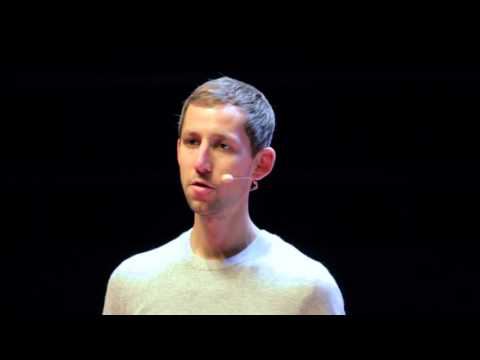
transcript
Transcriber: Sara Rodríguez Santos Reviewer: Denise RQ Open source: it started in the world of software, and has evolved to physical objects from furniture to drones; their blue prints are now shared openly. Open source means that you share your knowledge and files, and provide everyone the rights to make, change, and distribute these designs. And access to these resources empowers people to learn, solve problems, and start businesses. As founder of a platform where communities develop open source hardware, I've seen this movement grow from a handful of geeks to a very important pivotal point, where it's starting to impact millions of people. Let me show you how: two months ago, a startup company in Japan called Exiii did something that goes straight against the business textbooks. Exiii had developed a myoelectric prosthesis that's a prosthetic arm that you control with the electronic pulses present in your muscles. Exiii knew that their sophisticated product was too expensive for a large group of people in this world so they developed a simplified version, that could be 3D printed. They called it HACKberry, and made it open source. When Exiii shared the blueprints of their design on Wevolver web platform, our team-member Cameron got excited about the project and started posting about it on social media. The project struck a nerve. Within a week, millions of people had seen it. And among them, was Matt Cashman. His brother Ryan had recently lost both of his hands in a work accident, and Ryan was in need of a specialized prosthetic. So now that the large community had gotten involved, Matt Cashman could leverage their collaborative skills and get his brother the prosthesis that he needed. Soon, a team of over 40 individuals spread out all across the globe, started to innovate on the HACKberry. They come from various kinds of backgrounds. They make any R&D department jealous. For example, there is Max, a young, gifted engineer who's soon heading to a top university. But he's now in a summer job, so contributing to the HACKberry project enables him to keep growing his skills. There's a company that jumped in by making 3D scans of Ryan's arms, another one that is manufacturing parts out of solid aluminum. And among the team there's Neela. And Neela is a hand surgeon who works in the team that did the first hand transplant in Australia. Now Neela had never done any making, any engineering before. She's never touched a 3D printer. But now her expertise is incredibly valuable to the designers in the team. So we have one of the prototypes here. It is fully 3D printed. It uses affordable off-the-shelf electronics. And this is the sensor that picks up the electronic signals present in your muscles. It is really a beautiful piece of engineering, I think. It's a very powerful idea that, as we speak, people are innovating this design and making it stronger and better. And not only will Ryan get the prosthesis that he needs but also the knowledge this team has been accumulating remains available for others to build upon and keep making better and better and stronger prostheses. So the high level of contributions, as well as the diversity of the backgrounds of its team members, is reflecting in development I've seen in open hardware. The projects are moving out of the hands of purely engineers to a broad range of people and also non profits and businesses, and their efforts are starting to merge. And that is strongly empowering people to make new technologies. So anyone with an Internet connection can now tap into this. A project from a charity called techfortrade is showing the impact that this makes. techfortrade shared a remarkable technology on Wevolver. It's software that enables you to build 3D printers out of electronic waste. So, tell the program that you have a leftover fax machine and it shows you how to make a 3D printer from that; and that enables you to build super low cost 3D printers. A major problem with using 3D printers in developing areas is costs; not only for purchasing machines but also for getting specialized parts that you need, for example, to keep the machines running during maintenance. Things like power supplies all need to be imported from other countries that often triples their costs. So thanks to this software, 3D printers can now be locally built and maintained by their owners. This enabled Roy Ombatti to start a 3D printing business in Kenya. Roy didn't need large upfront capital. He could start building better 3D printers and get his business off the ground. He is also in [the position] to keep his machines running if things break down. And if technology evolves, Roy can keep evolving his printers as well. And there is nothing new people in developing areas are sharing and collaborating openly. Now these makers are connected to a global network, strongly empowering them to use technology. Within this network, we found another company, OpenROV from California, and they show how projects can move from passionate individuals to thriving businesses. OpenROV develops underwater robots for exploration, used by amateurs, scientists, and companies alike for exploring lakes, oceans, and shipwrecks and then sending images and data back to the surface. Interestingly, openROV would have not existed at all if it weren't open source. The company's founders, Eric Stackpole and David Lang, were both engineers and makers. But to develop the first under water robot they needed to learn new skills. They started sharing their ideas on a forum, and steadily grew this community of code developers around their work. And besides effectively crowdsourcing engineering, people started to request if they could buy a robot. And then Eric and David had a crowdfunding campaign, raised over a million dollars, and a company was formed. In return for you sharing your knowledge, your community provides you users, potential customers, and an R&D department; and in the case of OpenROV, that's over 4,000 people spread across 50 countries. Most of them amateur scientists, but also top engineers. And even National Geographic got involved when they made a dive with a robot into underwater caves in Mexico. This diverse community has enabled OpenROV to become the largest manufacturer of underwater robots in the world. And following the development of their robots from up-close, you see that when a community is able to enhance your product, it's in continuous development. And then, the more diverse backgrounds and the more people you can attract to your community, the greater potential skills you have access to, and the better your product can become. We are at a tipping point. More and more people start to leverage this power. And that's reflected in the quality of the technologies that are evolving and also the scope, the types of products that people are making. And seeing what our users are building is extremely inspiring. Because you guys, are also able to build bikes using 3D printers or work on an exoskeleton that's helping athletes train for the Paralympics. There is Plen, a 3D printable robot that will teach you about robotics, 3D printing, and software engineering. OSVehicle, a company that designs a base for electronic cars that empowers independent producers to change the car industry. And if you are into space photography, there is UltraScope. It is a telescope, that's smartphone-controlled, and automatically points towards planets, galaxies, and asteroids. So even the technology that contributes to space exploration, is now in the hands of everyone. And this body of resources, these projects just keep growing and growing. So think what Wikipedia did by opening up knowledge, and realize that the power to create technology is now available. And that empowers you to learn to solve problems and start your businesses. From 3D printed prosthetic, to drones that explore the ocean, or telescopes that map space, these innovators increasingly coming from all different backgrounds are changing science, economics, and our education. Welcome to the democratization of technology. Thank you. (Applause)
- from
- Open Hardware
- added
- 2026-10-10
- likes
- 0
Open Hardware › Talks: “TEDx talk by Bram Geenen.”