Sysdig
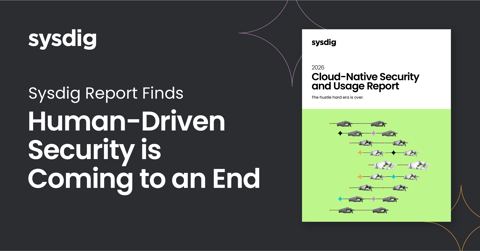
Cloud Native Security and Usage Report (2026) - Analyzes the current state of cloud native security and the transition toward autonomous, agentic vulnerability management as human capacity reaches its operational limits. Key findings reveal that while organizations have reduced…
- from
- Annual Security Reports
- added
- 2026-10-10
- likes
- 0
similar
-
Snyk snyk.io
Cloud Native Application Security Report (2026) - Examines the state of cloud native application security, highlighting deployment practices and vulnerability management trends. Key findings reveal that over 56 percent of organizations experienced a security incident involving…
-
Sysdig Secure sysdig.com
:yen: Sysdig Secure addresses run-time security through behavioral monitoring and defense, and provides deep forensics based on open source Sysdig for incident response.
-
Data Dog datadoghq.com
State Of Cloud Security (2025) - Analyzes cloud security posture across AWS, Azure, and Google Cloud with a focus on identity risks, default security gaps, and the uneven adoption of guardrails like IMDSv2, data perimeters, and public access blocks. The study highlights…
-
Cloudflare cloudflare.com
Security Signals Report (2026) - Analyzes the transition toward autonomic resilience in enterprise security, emphasizing the necessity of governing autonomous systems and mitigating systemic risks within modern digital architectures. Key findings reveal that 98 percent of…
-
Sysdig Cloud sysdig.com
-
Data Dog datadoghq.com
State Of DevSecOps (2026) - Analyzes the current state of DevSecOps by investigating the prevalence of exploitable vulnerabilities and the risks associated with rapid software dependency updates. Findings indicate that 87 percent of organizations maintain at least one…




Annual Security Reports › Analysis Reports > Cloud Security: “Cloud Native Security and Usage Report (2026) - Analyzes the current state of cloud native security and the transition toward autonomous, agentic vulnerability management as human capacity reaches its operational limits. Key findings reveal that while organizations have reduced…”