Rapid trail-and-error learning with simulation supports flexible tool use and physical reasoning.
Proceedings of the National Academy of Sciences, 2020. [All Versions]. [Project]. [Appendix]. Many animals, and an increasing number of artificial agents, display sophisticated capabilities to perceive and manipulate objects. But human beings remain distinctive in their…
- from
- AGI & CoCoSci
- added
- 2026-10-10
- likes
- 0
similar
-
Building Machines That Learn and Think Like People cambridge.org
Behavioral and Brain Sciences, 2017. [All Versions]. [Preprint]. Recent progress in artificial intelligence has renewed interest in building systems that learn and think like people. Many advances have come from using deep neural networks trained end-to-end in tasks such as…
-
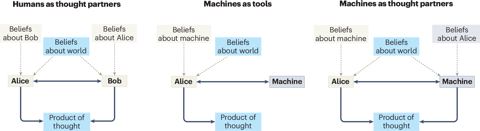
Building machines that learn and think with people nature.com
Nature Human Behavior, 2024. [All Versions]. [Preprint]. This perspective shows how the science of collaborative cognition can be put to work to engineer systems that really can be called ‘thought partners’, systems built to meet humans' expectations and complement humans…
-
Learning to act by integrating mental simulations and physical experiments cpilab.org
CogSci'18, 2018. [All Versions]. [Code].
-
Insightful problem solving and creative tool modification by captive nontool-using rooks pnas.org
Proceedings of the National Academy of Sciences, 2009. [All Versions]. [Supplementary Material]. A piece of evidence on creative tool use in intelligent animals.
-
Intensive tool-practice and skillfulness facilitate the extension of body representations in humans sciencedirect.com
Neuropsychologia, 2014. [All Versions].
-
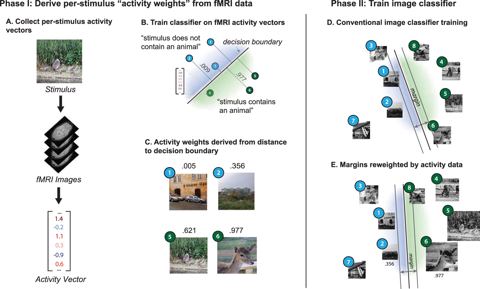
Using human brain activity to guide machine learning nature.com
Scientific Report, 2018. [All Versions].
AGI & CoCoSci › Papers > Problem Solving > Human-Level Problem Solving: “Proceedings of the National Academy of Sciences, 2020. [All Versions]. [Project]. [Appendix]. Many animals, and an increasing number of artificial agents, display sophisticated capabilities to perceive and manipulate objects. But human beings remain distinctive in their…”