The structure and function of explanations
Trends in Cognitive Sciences, 2006. [All Versions]. Generating and evaluating explanations is spontaneous, ubiquitous and fundamental to our sense of understanding. Recent evidence suggests that in the course of an individual's reasoning, engaging in explanation can have…
- from
- AGI & CoCoSci
- added
- 2026-10-10
- likes
- 0
similar
-
Explanation and Abductive Inference cognition.princeton.edu
The Oxford Handbook of Thinking and Reasoning, 2012. [All Versions]. This chapter reviews evidence from cognitive psychology and cognitive development concerning the structure and function of explanations, with a focus on the role of explanations in learning and inference. The…
-
Explanatory Preferences Shape Learning and Inference scholar.princeton.edu
Trends in Cognitive Sciences, 2016. [All Versions]. People often learn by seeking explanations, and they assess the viability of hypotheses by considering how well they explain the data. An emerging body of work reveals that both children and adults have strong and systematic…
-
The Role of Explanatory Considerations in Updating sciencedirect.com
Cognition, 2015. [All Versions]. This paper investigates experimentally controversy in philosophy about the connection between explanation and inference, of whether judgments of the explanatory goodness of hypotheses do play a role when people revise their degrees of belief in…
-
Probabilistic alternatives to Bayesianism: the case of explanationism frontiersin.org
Frontiers in Psychology, 2015. [All Versions]. A non-Bayesian account of Abduction.
-
Best, second-best, and good-enough explanations: How they matter to reasoning psycnet.apa.org
Journal of Experimental Psychology, 2018. [All Versions]. There is a wealth of evidence that people’s reasoning is influenced by explanatory considerations. Three experiments investigate the descriptive adequacy of a precise proposal to be found in the philosophical literature…
-
Use of current explanations in multicausal abductive reasoning onlinelibrary.wiley.com
Cognitive Science, 2001. [All Versions].
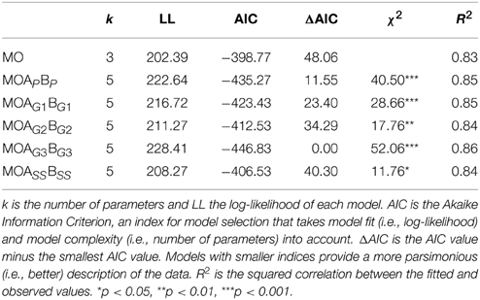
AGI & CoCoSci › Papers > Abduction > Explanation: “Trends in Cognitive Sciences, 2006. [All Versions]. Generating and evaluating explanations is spontaneous, ubiquitous and fundamental to our sense of understanding. Recent evidence suggests that in the course of an individual's reasoning, engaging in explanation can have…”