ProjectionNet: Learning Efficient On-Device Deep Networks Using Neural Projections
Replace word embeddings by word projections in your deep neural networks, which doesn't require a pre-extracted dictionnary nor storing embedding matrices.

- from
- Education
- added
- 2026-10-10
- likes
- 0
similar
-
Self Governing Neural Networks (SGNN): the Projection Layer github.com
With this, you can use words in your deep learning models without training nor loading embeddings.
-
Self-Governing Neural Networks for On-Device Short Text Classification aclweb.org
This paper is the sequel to the ProjectionNet just above. The SGNN is elaborated on the ProjectionNet, and the optimizations are detailed more in-depth (also see my attempt to reproduce the paper in code and watch the talks' recording).
-
Semantic projection recovers rich human knowledge of multiple object features from word embeddings nature.com
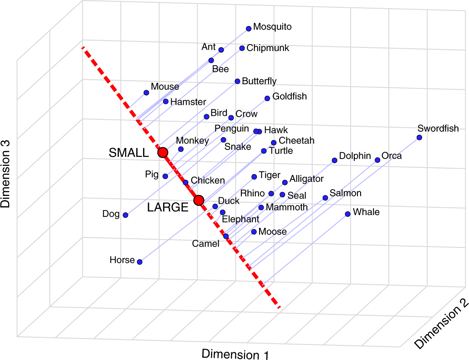
Nature Human Behavior, 2022. [All Versions]. [Preprint]. How is knowledge about word meaning represented in the mental lexicon? Current computational models infer word meanings from lexical co-occurrence patterns. They learn to represent words as vectors in a multidimensional…
-
IMAGENET image-net.org
-
MXNet github.com
Lightweight, Portable, Flexible Distributed/Mobile Deep Learning with Dynamic, Mutation-aware Dataflow Dep Scheduler; for Python, R, Julia, Scala, Go, JavaScript and more. website
-
Inception-v4, Inception-ResNet and the Impact of Residual Connections on Learning arxiv.org
For improving GoogLeNet with residual connections.

Education › Papers > Other: “Replace word embeddings by word projections in your deep neural networks, which doesn't require a pre-extracted dictionnary nor storing embedding matrices.”