Introduction to Probability and Statistics Using R
The book can be subdivided into three basic parts. The first part includes the introductions and elementary descriptive statistics; I want the students to be knee-deep in data right out of the gate. The second part is the study of probability, which begins at the basics of sets…
- from
- Learning
- added
- 2026-10-10
- likes
- 0
similar
-
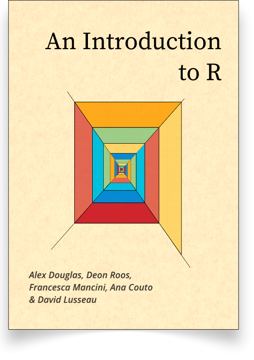
An Introduction to R intro2r.com
The aim of this book is to introduce you to using R, a powerful and flexible interactive environment for statistical computing and research. Authors: Alex Douglas, Deon Roos, Francesca Mancini, Ana Couto & David Lusseau
-
The Book of R web.itu.edu.tr
The aim of The Book of R: A First Course in Programming and Statistics is to provide a relatively gentle yet informative exposure to the statistical software environment R, alongside some common statistical analyses, so that readers may have a solid foundation from which to…
-
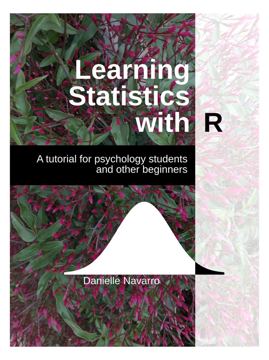
Learning Statistics with R learningstatisticswithr.com
Learning Statistics with R covers the contents of an introductory statistics class, as typically taught to undergraduate psychology students, focusing on the use of the R statistical software. Author: Danielle Navarro.
-
An Introduction to Statistical Learning, with Applications in R www-bcf.usc.edu
-
Introduction to Data Science - Data Analysis and Prediction Algorithms with R rafalab.github.io
This book started out as the class notes used in the HarvardX Data Science Series. It introduces concepts and skills that can help you tackle real-world data analysis challenges. It covers concepts from probability, statistical inference, linear regression, and machine…
-
Learning › Books: “The book can be subdivided into three basic parts. The first part includes the introductions and elementary descriptive statistics; I want the students to be knee-deep in data right out of the gate. The second part is the study of probability, which begins at the basics of sets…”