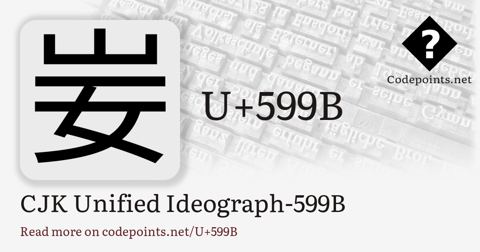
妛
, 挧, 暃, 椦, 槞, 蟐, 袮, 閠, 駲, 墸, 壥, and 彁. These so-called “ghost characters” came to Unicode via the Japanese JIS standard, where they were added, because they were mis-read or misinterpreted from other signs, when JIS was compiled from original printed text sources.
- from
- Code Points
- added
- 2026-10-10
- likes
- 0
similar
-
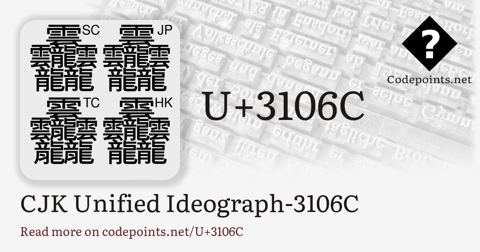
U+3106C codepoints.net
CJK UNIFIED IDEOGRAPH 3106C - the character with the most strokes: 84. Take your time to write this one!
-
host of characters codepoints.net
, that add to the characters before. Those are called Combining Marks. Unicode provides a handy FAQ on the details, but in a nutshell: If you add one after a character, it is placed on top of that previous one. So, a + ̊ = å. This may lead to all kinds of funny problems…
-
U+200D codepoints.net
ZERO WIDTH JOINER - force adjacent characters to be joined together (e.g., arabic characters or supported emoji). Apple uses this to compose some emoji like different families.
-
U+0080 codepoints.net
, U+0081 and U+0099. These so-called C1 control characters are more or less unspecified. They got into Unicode, because they were present in the very first version of what should later become ISO 10646, the ISO-standardized version of Unicode. They were meant to be part of an…
-
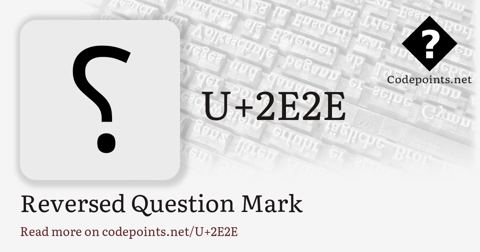
U+2E2E codepoints.net
REVERSED QUESTION MARK - the “irony mark” to express irony/sarcasm. A useful character⸮
-
Code Points › Record Holders and Extremes: “, 挧, 暃, 椦, 槞, 蟐, 袮, 閠, 駲, 墸, 壥, and 彁. These so-called “ghost characters” came to Unicode via the Japanese JIS standard, where they were added, because they were mis-read or misinterpreted from other signs, when JIS was compiled from original printed text sources.”